A swing top is one purchase. A crown cap is three. What you get for the extra two is a seal that is brand new on every bottle, every time.
By Scooter M.·Published September 6, 2026 · Updated October 18, 2026
The short answer
Use crown caps if you bottle a full gallon at a time and want a brand-new seal on every bottle. You need three things, not one: 26 mm pry-off bottles, 26 mm caps, and a capper. Use swing tops if you bottle two or three at a time and want to open one without a tool. Both hold a second ferment; only the crown seal is new every time.
What the choice actually turns on
Both closures work. Kombucha has been second-fermented in both for as long as people have been doing it at home, and neither is a safety upgrade over the other. So the decision is not about which is better in the abstract — it is about four practical things, and they point in different directions depending on how you brew.
Where the seal lives. A swing top's seal is a rubber gasket that stays with the bottle and ages with it. A crown cap's seal is a fresh liner crimped on at bottling and thrown away at opening. One is a maintenance item; the other is a consumable.
How many bottles per session. Capping is fast per bottle once the capper is on the counter, and slow to set up. Swing tops are instant for three bottles and no faster for twenty. The break-even is somewhere around a gallon.
What is published about pressure. A second ferment is a small pressure vessel. Most bottles publish nothing. The two on this page that do — a carbonation-volume figure and a PSI figure — are the reason both are here.
What has to live in your kitchen. A capper is twelve pounds and eight inches tall. That is a real cost that no specification sheet will list for you.
Everything below is scored on the same published rubric used across this site, and the weights are on the methodology page. We have not pressure-tested any of this; what we have done is find the makers who publish a number and hold them next to the ones who do not.
The published numbers, side by side
Two of these bottles state what they can take. That is unusual enough in this category that it is most of the argument for buying either one.
Published closure and pressure information for the bottles on this page, compiled 2026-09-06. A blank means the maker publishes nothing on the subject.
Bottle
Closure
Published rating
Seal replaced
12 oz amber longneck
26 mm crown, pry-off
Up to 3 volumes of carbonation
Every bottling — a new cap
EZ Cap 16 oz amber
Swing top
100 PSI
When the gasket perishes
Bormioli Rocco Swing 1 L
Swing top
—
When the gasket perishes
The two ratings are not directly comparable, and it would be dishonest to pretend otherwise: one is a volume of dissolved CO2 and the other is a pressure in pounds per square inch, measured differently and stated for different purposes. What they have in common is that somebody was willing to write a number down. A decorative bottle with no rating at all is the thing to avoid, and that describes most glassware in most kitchens.
Crown caps are three purchases
This is the part people discover after ordering the bottles. A case of longnecks is useless on its own. You need caps, which are consumable, and you need a capper, which is a tool. Budget for all three or the case sits in a cupboard.
The bottles. 26 mm pry-off, not twist-off. This matters: a twist-off finish will not hold a crown reliably, so the empty beer bottles in your recycling are only usable if they were pry-off to begin with.
The caps. 26 mm, one per bottle per bottling, and 144 in a bag is roughly fourteen gallon batches at twelve-ounce bottles.
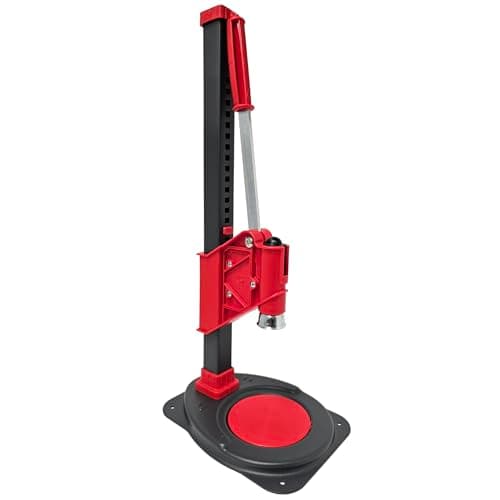
The capper. A bench capper works with one arm and applies force straight down. A two-handed wing capper is cheaper and more likely to chip a neck when you get the angle wrong.
The picks
The whole crown-cap setup
Bottles with a published carbonation rating, standard 26 mm caps, and the bench capper that makes the whole thing fast rather than fiddly. All three, or none of them.
Score8.3no photo yet
MoreBeer
Traditional Longneck Beer Bottles, Amber, 12 oz (Case of 24)
A published carbonation rating, amber glass and a crown finish — the cheapest way to put a gallon of kombucha under pressure it was designed for.
#ad No live price feed yet, so no number is shown rather than a stale one. How this is funded.
Ferrari
Super Agata Bench Capper
A bench capper with a magnetic bell and a published 4-to-12-inch bottle range, which is the difference between capping a gallon in five minutes and dreading it.
Most crown caps sold to homebrewers now carry an oxygen-scavenging liner, described by the seller as absorbing leftover oxygen in the bottle neck to reduce oxidation. That is a real feature and it is a real benefit — for beer.
Kombucha is a different problem. The first fermentation is deliberately open to the air; the drink is acidic and full of live organisms that are entirely comfortable in that environment. Oxidation in the headspace is simply not the failure mode that ruins a bottle of kombucha. Under-carbonation is, and that has other causes.
So you are paying a small premium for a benefit that is mostly not yours. It is not a reason to avoid them — oxygen-absorbing caps are the caps that are stocked, they cost very little more, and they seal exactly as well. It is a reason not to pay extra hunting for them.
Capping, in practice
The mechanics are simpler than the equipment suggests. Fill to the shoulder, leaving the headspace the bottling method calls for. Set a cap on the bottle mouth. Bring the arm down. The bell crimps the skirt of the cap under the lip of the bottle in one motion, and it is done.
The published bottle range on a bench capper — 4 to 12 inches — is the specification worth checking against what you actually own, because a capper that will not reach your bottle is an expensive paperweight. Twelve-ounce longnecks and champagne bottles both sit inside that range comfortably.
A magnetic bell is not a luxury. Without it you are balancing a small steel disc on a wet bottle neck with one hand while pulling a lever with the other, and the cap goes on the floor about one time in five.
What goes wrong with each
Crown caps fail in two ways, both of them recoverable. A cap crimped at an angle will leak slowly, which shows up as a bottle that never carbonates while its neighbors do. And a bottle with a chipped lip — usually from a wing capper used badly — will never seal again and should be retired rather than reused.
Swing tops fail in one way, and it is quieter. The gasket hardens, loses compression and stops sealing, often without any visible cracking. Gaskets and flat kombucha covers how to test one, but the short version is that a gasket is a wear part on a schedule you have to remember, and a crown cap is not.
That is the honest trade. Crown caps move the failure from a part you forget about to a step you perform, and steps you perform are easier to get right than parts you forget.
The running cost, and the cupboard cost
Over any single batch, swing tops are cheaper — there is nothing to buy after the bottles. Over years, the arithmetic narrows, because gaskets need replacing and caps are genuinely cheap per bottle. Neither difference is large enough to decide anything.
The cost that does decide it is space and setup. A bench capper is twelve pounds and it has to come out and go away every bottling day. If you brew a gallon a week and bottle ten at a time, that is a fair trade for a fast, reliable seal. If you bottle three bottles on a whim, it is not, and a swing top with a published pressure rating is the better purchase.
Reusing bottles you already have
The appeal of crown caps is partly that the bottles are already in your recycling. That is true up to a point, and the point is the finish on the neck.
Hold a bottle upside down and look at the lip. A pry-off finish is a smooth ring with a single flared lip and no threads below it. A twist-off finish has visible spiral threads molded into the glass under the lip, and those threads are why a crown will not crimp cleanly against it. Most mass-market American beer is twist-off; most imported and craft beer is pry-off. Sort by looking, not by brand.
Two more checks before a salvaged bottle joins the rotation. Run a thumbnail around the lip: any chip, however small, means the cap has nowhere clean to seal and the bottle is scrap. And hold it up to the light — a bottle that has been through a dishwasher a hundred times develops a haze that is cosmetic, but visible internal scratching is not, because a scratched interior is a weak point under pressure.
Labels come off with a long soak in hot water; the adhesive on most modern labels releases in twenty minutes or so. It is worth doing, because an old label on a bottle of kombucha is exactly how somebody in the house ends up drinking the wrong thing.
Bench capper or wing capper
There are two shapes of hand capper and the difference matters more than the price gap suggests.
A wing capper is the cheap one: two levers you press down with both hands while the bottle stands on the counter. It works, and it is what most people start with. Its weakness is that all the force comes from your arms, unevenly, and any tilt puts a sideways load on the bottle lip. That is the mechanism behind almost every chipped neck in a home setup.
A bench capper is mounted or weighted, holds the bottle square underneath, and drives the bell straight down through a single arm. The force is aligned by the tool rather than by your technique, which is why it is both faster and gentler. The published 4-to-12-inch range means one tool covers everything from a twelve-ounce longneck to a champagne bottle, which matters if you ever bottle a larger format.
If you are bottling a gallon at a time, the bench capper is the one worth owning. If crown caps are an occasional experiment alongside a swing-top habit, a wing capper is a reasonable place to find out whether you like the method before committing counter space to it.
There is a fourth purchase nobody lists and everybody eventually makes. A longneck has a neck far narrower than a hand, so residue sits where you cannot reach it, and a bottle brush published at 16 inches with a 2.75 inch head covers the whole 12-to-22 oz range — funnels, fillers and bottle brushes covers it alongside the tools that get the kombucha in there in the first place.
If you already own a capper and a crate of longnecks because you brew beer, you have already solved the part of kombucha that most new brewers have not even reached yet. Brewing kombucha when you already brew beer covers what else on that shelf transfers, the two adjustments to make to your bottling routine, and the three pieces of kit to leave in the cupboard.
Heads up: some links on this page are affiliate links. If you buy through one we may earn a commission at no extra cost to you. It never changes a ranking, and we take no payment for placement. The full version.
The short answer
Quick picks
Ranked on the published rubric. Every row jumps to that product's full write-up below; the button goes straight to Amazon.
#
Product
Best for
Score
Price
1
Score8.3
MoreBeer
Traditional Longneck Beer Bottles, Amber, 12 oz (Case of 24)
A published carbonation rating, amber glass and a crown finish — the cheapest way to put a gallon of kombucha under pressure it was designed for.
A bench capper with a magnetic bell and a published 4-to-12-inch bottle range, which is the difference between capping a gallon in five minutes and dreading it.
Italian soda-lime glass with a published height and diameter and a hermetic clamp seal — the bottle that looks like a bottle, with the dimensions to check it fits a fridge door.
MoreBeer Traditional Longneck Beer Bottles, Amber, 12 oz (Case of 24)
A published carbonation rating, amber glass and a crown finish — the cheapest way to put a gallon of kombucha under pressure it was designed for.
Who it is for. Anyone bottling a full gallon at once who wants a fresh, gasket-free seal on every bottle and does not mind owning a capper.
Published specifications
Capacity
12 fl oz
Glass
Amber
Case quantity
24 bottles, with dividers
Closure
26 mm crown cap. Pry-off, not twist-off
Pressure rating
“Up to 3 volumes of carbonation”
Light protection
“Thick amber glass offers better protection against UV rays compared to green or clear glass”
Reuse
Standard returnable-style glass, designed for repeated capping
Gasket
None. The seal is the cap liner, replaced every time
Source: MoreBeer published product specification for 12 oz amber traditional longneck beer bottles, case of 24 (capacity, glass color, case quantity and dividers, 26 mm crown finish, “up to 3 volumes of carbonation”, amber UV statement), morebeer.com, retrieved 2026-09-06
Rubric — 8.3 / 10
Materials9/10 · weight 28%
Documentation8/10 · weight 22%
Capacity fit8/10 · weight 16%
Cleaning7/10 · weight 18%
Value9/10 · weight 16%
What it gets right
A published carbonation figure — three volumes — which puts it in the same small group as EZ Cap’s 100 PSI and ahead of every unrated decorative bottle
Twenty-four twelve-ounce bottles is 288 oz, comfortably more than a gallon batch, so one case covers a brew with spares
Amber glass with a published UV claim, which matters because light degrades a second ferment
No gasket to perish. The seal is a fresh cap liner every time, which removes the commonest cause of a flat bottle
What it costs you
You cannot use it without also buying caps and a capper, so the real entry cost is three purchases, not one
Pry-off only. A twist-off beer bottle will not hold a crown reliably and should not be reused for a second ferment
The neck is narrow, so cleaning needs a bottle brush rather than a hand
No published dimensions from the retailer, so shelf height has to be measured off a bottle you already own
Skip it if. You bottle two or three at a time and want to open one without a tool. A swing top is the better fit for small, casual batches.
#ad No live price feed yet, so no number is shown rather than a stale one. How this is funded.
Score7.4no photo yet
#2 · A fresh seal on every single bottle
The Cary Company Beer Bottle Caps, Oxygen Absorbing, 26 mm Pry-Off (144/bag)
Standard 26 mm steel crowns with an oxygen-scavenging liner — the consumable half of crown-cap bottling, and the reason the seal never wears out.
Who it is for. Anyone running crown-cap bottles who wants the seal to be a fresh consumable rather than an aging rubber ring.
Published specifications
Diameter
26 mm
Crown type
Pry-off
Material
Steel
Count
144 per bag
Liner
Oxygen absorbing cap liner
Published liner claim
“Oxygen scavenger liners are special interior plastic liners that absorb any leftover oxygen in the bottle neck finish. This helps to decrease beer or beverage oxidation.”
PVC status
Not published on this listing
Liner activation
Not published on this listing
Source: The Cary Company published specification for oxygen-absorbing 26 mm pry-off crown beer bottle caps, 144/bag (diameter, crown type, steel construction, count, oxygen-scavenger liner description), thecarycompany.com, retrieved 2026-09-06
Rubric — 7.4 / 10
Materials8/10 · weight 28%
Documentation6/10 · weight 22%
Capacity fit7/10 · weight 16%
Cleaning9/10 · weight 18%
Value7/10 · weight 16%
What it gets right
Every bottle gets a brand-new seal, so there is no gasket aging quietly in a drawer between batches
One hundred and forty-four caps is roughly fourteen gallon batches at twelve-ounce bottles — a year of brewing for most people
26 mm pry-off is the universal size, so the caps fit any standard longneck and any standard capper
Cheap enough per cap that nobody is tempted to reuse a bent one, which is how flat bottles happen
What it costs you
The oxygen-absorbing liner is a beer feature. Kombucha is already an aerobic-then-anaerobic ferment and oxidation is not its failure mode, so you are paying a little for a benefit that mostly is not yours
Neither the PVC status of the liner nor when it activates is published on this listing
Single use. A crown that has been pried off is scrap
Useless on their own — caps need both the right bottles and a capper
Skip it if. You are bottling into swing tops. These fit nothing you own, and a swing-top gasket is the part to replace instead.
#ad No live price feed yet, so no number is shown rather than a stale one. How this is funded.
#3 · Capping a whole batch without a fight
Ferrari Super Agata Bench Capper
A bench capper with a magnetic bell and a published 4-to-12-inch bottle range, which is the difference between capping a gallon in five minutes and dreading it.
Who it is for. Someone bottling a gallon or more at a time on a regular schedule, who wants capping to be the fast part of bottling day.
Published specifications
Type
Bench capper. Sits on a counter, worked with one arm
Bottle range
Any bottle from 4 in to 12 in tall, including champagne bottles
Height adjustment
Spring-loaded head. Press the side button and slide the capping mechanism up or down
Bell
Magnetic bell housing that holds the cap in place while capping
Construction
Metal and plastic
Assembled height
7.9 in
Assembled weight
12 lb
Cap size
Not stated by the maker. It is built around the standard 26 mm crown
Source: Ferrari Super Agata bench capper specification as published across homebrew retailer listings and the Amazon product listing (4-12 in bottle range including champagne bottles, spring-loaded button-adjusted head, magnetic bell housing, metal and plastic construction, 7.9 in assembled height, 12 lb assembled weight), retrieved 2026-09-06
Rubric — 7.8 / 10
Materials8/10 · weight 28%
Documentation7/10 · weight 22%
Capacity fit9/10 · weight 16%
Cleaning9/10 · weight 18%
Value6/10 · weight 16%
What it gets right
A published bottle range of 4 to 12 inches covers every kombucha bottle anyone actually uses, including champagne bottles
The magnetic bell holds the cap so you are not balancing a crown on a wet bottle neck with one hand
A bench capper applies force straight down through the arm, which is why it does not chip necks the way a two-handed wing capper can
It touches nothing that goes in the drink, so it never needs sanitizing
What it costs you
Twelve pounds and eight inches tall. This is a tool that has to live somewhere, and it is not a drawer
The maker does not publish the cap size it takes, which is a strange omission on a capper
It is the most expensive item in a crown-cap setup and it does exactly one thing
Pointless unless you have committed to crown caps — it cannot close a swing top
Skip it if. You bottle a few swing tops at a time. A capper is a purchase that only pays back if crown caps are your standing method.
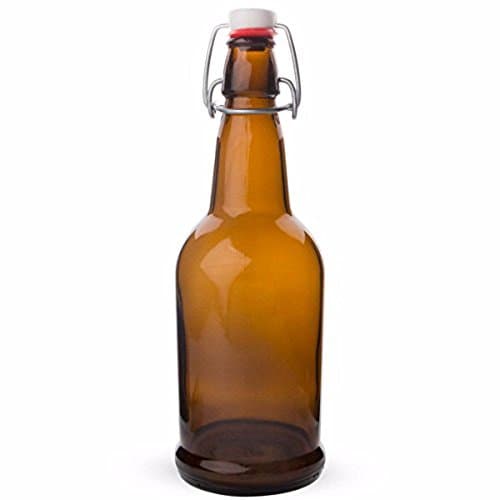
EZ Cap Swing Top Bottles, Amber Glass, 16 oz (Case of 12)
The only bottle here with a published pressure rating — 100 PSI — in amber glass, which is the combination a second ferment actually asks for.
Who it is for. Anyone doing a second ferment who wants a bottle with a number behind it rather than a shape that looks strong.
Published specifications
Capacity
16 oz
Glass color
Amber
Pressure rating
“Pressure rated to 100 PSI which means they can easily handle the carbonation of soda pop and hard seltzer”
Case quantity
12 bottles, includes 12 swing tops
Closure
Reusable swing top; also accepts a 26 mm pry-off crown cap
Maker’s note
“These swing tops are designed to be primarily sealed with a crown cap closure for long term storage.”
Dimensions
Not published
Source: MoreBeer published EZ Cap product specification (capacity, pressure rating, case contents, crown cap compatibility), morebeer.com/products/ez-cap-swing-top-bottles-amber-glass-16-oz-case-12, fetched 2026-09-01
Rubric — 8.3 / 10
Materials9/10 · weight 28%
Documentation9/10 · weight 22%
Capacity fit8/10 · weight 16%
Cleaning7/10 · weight 18%
Value8/10 · weight 16%
What it gets right
A published 100 PSI rating is the single most useful number in this whole category, and almost nobody publishes one
Amber glass blocks the light that degrades a bottle sitting out on a counter through a second ferment
The dual finish means you can crown-cap a batch you want to leave for months and swing-top the ones you will drink this week
16 oz is one serving, so a bottle gets opened once and drunk rather than losing its carbonation over three days
What it costs you
Swing-top gaskets perish, and a tired gasket is the commonest cause of a flat second ferment
No dimensions published, so fitting twelve of them on a fridge shelf is a measuring job when they arrive
Crown caps are sold separately if you want the long-storage option the maker recommends
Skip it if. You want to see the color of the finished drink. Amber hides it; the clear version of the same bottle does not.
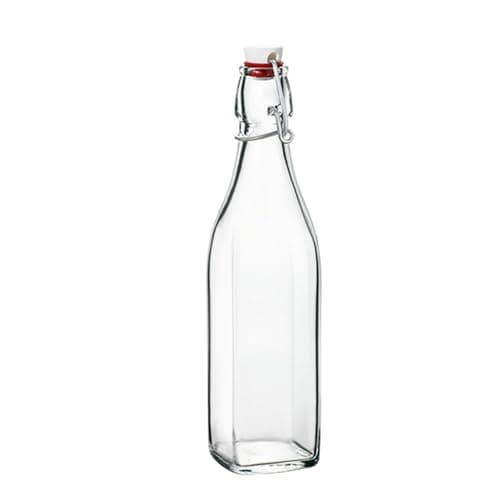
Italian soda-lime glass with a published height and diameter and a hermetic clamp seal — the bottle that looks like a bottle, with the dimensions to check it fits a fridge door.
Who it is for. Someone bottling a lightly carbonated kombucha for the table, or storing finished kombucha in the fridge rather than conditioning it on a counter.
Published specifications
Capacity
33.75 oz (1 liter)
Height
12.13 inches
Diameter
3.5 inches
Glass
BPA-free and lead-free soda-lime glass
Origin
Glass and components made in Italy
Closure
Hermetic swing top: metal clasp, stopper and gasket
Care
Dishwasher safe without the swing top. Hand wash the metal clamp, stopper and gasket.
Pressure rating
Not published
Source: Bormioli Rocco published Swing bottle specification (capacity, 12.13 in height, 3.5 in diameter, soda-lime glass, hermetic seal, care instructions), retailer specification listings retrieved 2026-09-01
Rubric — 8.0 / 10
Materials8/10 · weight 28%
Documentation8/10 · weight 22%
Capacity fit8/10 · weight 16%
Cleaning8/10 · weight 18%
Value8/10 · weight 16%
What it gets right
Height and diameter both published, so you can check a fridge shelf before ordering
Lead-free soda-lime glass is stated, which matters for a container holding a pH-3 liquid for weeks
The bottle body is dishwasher safe, and only the small parts need hand washing
Genuinely presentable — this is the bottle to hand someone
What it costs you
No published pressure rating, which is the one number a second ferment cares about most
Clear glass, so light gets to the drink
A liter is a lot to open at once
Skip it if. You are chasing hard carbonation. Without a stated pressure rating, a bottle you are deliberately building pressure inside is a bottle you are guessing about — use the rated EZ Cap instead.
Yes, provided they are pry-off rather than twist-off. Standard 12 oz amber longnecks take a 26 mm crown cap and one retailer publishes a rating of up to 3 volumes of carbonation for them. Twist-off bottles will not hold a crown reliably and should not be used for a second ferment.
Do I need a capper for crown caps?+
Yes. A crown cap is crimped, not screwed, so there is no way to seat one by hand. A bench capper works with one arm and handles bottles from 4 to 12 inches tall; a two-handed wing capper is cheaper and more likely to chip a bottle neck.
Are crown caps better than swing tops for kombucha?+
Neither is safer. Crown caps give a brand-new seal on every bottle and suit bottling a full gallon at once. Swing tops open without a tool and suit bottling two or three at a time, but their gasket is a wear part that hardens over time and eventually stops sealing.
Do I need oxygen-absorbing bottle caps for kombucha?+
No. The oxygen-scavenging liner is designed to reduce oxidation in beer, and oxidation is not what spoils a bottle of kombucha. They seal exactly as well as plain caps and are usually what is stocked, so use them if that is what you find — just do not pay a premium for the liner.
How many 12 oz bottles does a gallon of kombucha fill?+
A gallon is 128 fluid ounces, so about ten 12 oz bottles once you allow headspace in each one. A case of 24 covers a gallon batch with spares, which is why the case size and the batch size pair up neatly.
Sources
Every specification cited on this page came from one of these documents, retrieved on the date shown against the product it belongs to.