A kombucha kit is a jar, a culture, some tea and some sugar. What separates a good one from a bad one is whether it also gives you a way to measure what is happening.
Twelve fluid ounces of mature starter tea with the pellicle, measured against the maker’s own published ten percent rule — the fullest kit of the group.
Buy a kit if you own none of the pieces. Buy the culture on its own if you already have a gallon jar, because the jar is most of what you are paying for. Whichever route you take, make sure pH strips are in the order somewhere — they are the only instrument that answers the safety question.
What a kombucha kit actually is
Strip the packaging away and every kit on the market is the same four things: a vessel big enough for a batch, a live culture with some mature starter tea, tea leaves, and sugar. Everything beyond that is either a measuring instrument or a convenience. The reason kits vary so much in price is not that some contain a secret ingredient. It is that some include the instruments and some do not, and that the jar is a surprisingly large share of the cost.
The culture is the part that cannot be substituted. Kombucha does not start from a packet of dried yeast the way beer does; it starts from an existing colony, which means somebody has to have grown it and shipped it to you alive. That is why a kit and a bag of tea are not the same purchase, and why the quality of the starter tea in the box matters more than the number of items on the contents list.
Starter tea is the part that protects your first batch
Most people assume the pellicle — the rubbery disc, the thing everyone calls the SCOBY — is what makes kombucha. It is not, or at least not on its own. The pellicle is mostly cellulose: a raft the culture builds. The organisms that actually do the work are suspended in the liquid, and the liquid is also what drops your fresh, sweet, neutral tea down to an acidity where mold cannot establish. A pellicle arriving in a teaspoon of liquid is a much weaker start than a pellicle arriving in a measured cup of mature starter tea.
Fermentaholics publishes the rule plainly: use 10% starter tea per batch size. Against a 128 oz gallon, that is roughly 13 oz. Its gallon culture ships with 12 fl oz, which is 9.4 percent — near enough that the quantity in the box matches the instruction on the box. The Kombucha Shop ships one cup, 8 oz, which is 6.3 percent of a gallon. Both work. The larger pour gives you more margin in a cool room, which is exactly when a first batch is most likely to stall.
The instruments separate the kits
Two cheap items decide whether you are brewing or guessing, and they are the fastest way to tell a serious kit from a decorative one.
pH strips. Finished kombucha sits at roughly 2.5 to 3.5. A first batch that has not dropped below about 4.2 has not built its own defense yet. Strips cost almost nothing and are the only way to know. What pH kombucha should be goes through the numbers.
A temperature strip. Kombucha wants roughly 75 to 85 F. The difference between a jar at 68 F and one at 78 F is the difference between a batch that stalls and a batch that finishes in a week. See brewing temperature.
What each kit publishes
Compiled from each maker's published contents list, 2026-09-01. A blank cell means the maker does not list the item.
Kit
Culture
pH strips
Thermometer
Tea & sugar
The Kombucha Shop
Culture + 1 cup starter
Yes
Yes
Yes
Fermentaholics Complete
Pellicle + 12 fl oz starter
Yes
Yes
Yes
Craft a Brew Starter
Live SCOBY + starter liquid
No
No
Yes
Fermentaholics Essentials
Organic SCOBY
No
Yes
No
When a kit is the wrong purchase
If you already own a gallon jar, a kit makes you buy a second one. The glass is typically the single largest line item, and a plain gallon jar is a commodity. In that case buy the culture on its own, add pH strips, and use the tea already in your cupboard. The result is identical and costs a fraction of the kit.
The other case is scale. A one-gallon kit is a one-gallon kit; if you already know you want a continuous brew running on the counter, the kit's jar will be too small from day one and you will be shopping continuous brew vessels within a month.
And a kit is the wrong purchase if the ferment you actually want is not kombucha. Jun, water kefir and milk kefir each need their own culture and their own schedule — kits for the ferments that are not kombucha compares what each one asks of you before you buy the wrong box.
One maker is worth knowing by name before you choose a box. Our review of The Kombucha Shop reads that range against its own published contents lists — including the one kit here that ships bottles, a funnel and a brush alongside the brewing gear — and records the figures it never states.
Two kits here now have a page of their own. The Kombucha Shop review works through the fullest range on the site, and the Craft A Brew kit review covers the leanest — including the two kits sold under almost the same name, only one of which publishes tea and sugar in the box.
And if you are not starting from nothing: brewing kombucha when you already brew beer audits a homebrew shelf item by item, because most of a kit is already on it — and three of the things on that shelf will quietly make kombucha worse.
Heads up: some links on this page are affiliate links. If you buy through one we may earn a commission at no extra cost to you. It never changes a ranking, and we take no payment for placement. The full version.
The short answer
Quick picks
Ranked on the published rubric. Every row jumps to that product's full write-up below; the button goes straight to Amazon.
#
Product
Best for
Score
Price
1
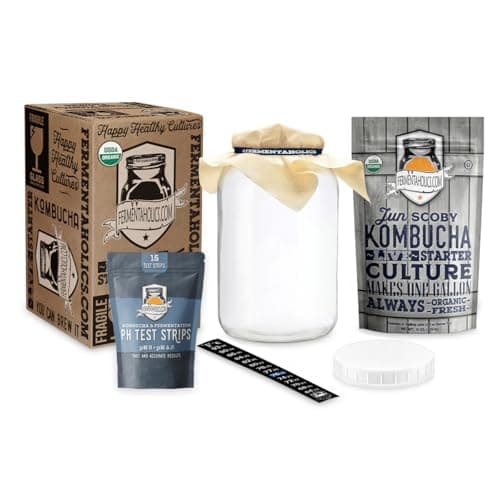
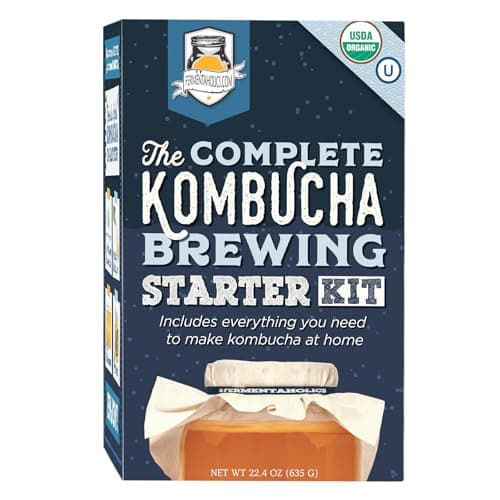
Fermentaholics
Complete Kombucha Brewing Starter Kit (1 Gallon)
Twelve fluid ounces of mature starter tea with the pellicle, measured against the maker’s own published ten percent rule — the fullest kit of the group.
The only kit here that ships pH strips, a pipette and a temperature gauge in the box, which is the difference between brewing kombucha and guessing at it.
A jun culture is a different organism community to a kombucha SCOBY, and it will not appear by feeding a kombucha culture honey — this is the way to start jun properly.
Twelve fluid ounces of mature starter tea with the pellicle, measured against the maker’s own published ten percent rule — the fullest kit of the group.
Who it is for. Someone who wants the culture to be the strongest part of the kit rather than the jar.
Published specifications
Batch size
1 gallon
Culture
Kombucha starter culture: pellicle plus 12 fl oz of mature starter tea, measured for a 1-gallon batch
Jar
1-gallon brew jar
Tea and sugar
Tea blend, organic cane sugar, reusable cotton tea bag
Measurement gear
Adhesive thermometer, pH strips, pipette
Cover
Cotton cloth cover and rubber band
Certification
USDA Certified Organic; also stated Kosher, Non-GMO and vegan
Starter tea ingredients
Organic cane sugar, filtered water, organic black tea, live cultures
Documentation
Detailed instructions and a flavoring guide
Source: Fermentaholics published kit contents and culture specification, fermentaholics.com/product/the-complete-kombucha-brewing-starter-kit/, retrieved 2026-09-01
Rubric — 8.0 / 10
Materials8/10 · weight 28%
Documentation9/10 · weight 22%
Capacity fit8/10 · weight 16%
Cleaning7/10 · weight 18%
Value8/10 · weight 16%
What it gets right
12 fl oz against a 128 oz gallon is 9.4 percent, within a rounding error of the maker’s own 10 percent rule — the quantity matches the instruction
Both instruments a first batch needs, thermometer and pH strips, are in the box
The starter tea’s ingredients are published, which almost no culture seller does
USDA Organic, Kosher, Non-GMO and vegan claims are all stated together rather than implied
What it costs you
No jar dimensions published
The jar is plain glass with no volume markers, so the 10 percent reserve is a judgment call
Nothing in the kit addresses bottling — you finish the batch with nowhere to put it
Skip it if. You want to bottle at the end of week one. Nothing here holds pressure; budget for swing-top bottles at the same time.
The only kit here that ships pH strips, a pipette and a temperature gauge in the box, which is the difference between brewing kombucha and guessing at it.
Who it is for. Someone brewing their first batch who wants the measurement gear included rather than ordered separately three days in.
Published specifications
Batch size
1 gallon
Jar
One Gallon Brew Jar with plastic lid, thick American glass, screen-printed Brew Notes on the side
Culture
Organic kombucha culture plus 1 cup liquid starter
Culture aging
Stated to ferment for a minimum of 6 weeks before shipping
Tea
Organic loose leaf black and oolong, with a reusable cotton tea bag
Measurement gear
pH test strips, pipette, temperature gauge, wet-erase marker
Cover
Cotton cover and rubber band
Certification
USDA Organic Certified
Spigot
None. The jar takes a plastic lid, not a tap.
Source: The Kombucha Shop published kit contents and product description, thekombuchashop.com/products/kombucha-brewing-kit, fetched 2026-09-01
Rubric — 7.4 / 10
Materials8/10 · weight 28%
Documentation7/10 · weight 22%
Capacity fit8/10 · weight 16%
Cleaning7/10 · weight 18%
Value7/10 · weight 16%
What it gets right
pH strips and a pipette in the box mean you can answer “is this safe yet” on day three instead of guessing
The culture is stated to ferment a minimum of six weeks before it ships, which is a long lead time and shows in how fast a first batch takes off
Brew Notes screen-printed on the glass keep the start date on the jar rather than on a sticky note
USDA Organic certification covers the tea, sugar and culture together
What it costs you
No jar dimensions are published anywhere, so you cannot check it against a shelf before ordering
No spigot, so bottling means lifting a full gallon and siphoning or pouring
The most expensive of the four kits here, and some of that is the marker
Skip it if. You already own a gallon jar. You are paying for glass you have, and a culture-plus-ingredients pack costs far less.
#ad No live price feed yet, so no number is shown rather than a stale one. How this is funded.
#5 · Starting on jun rather than kombucha
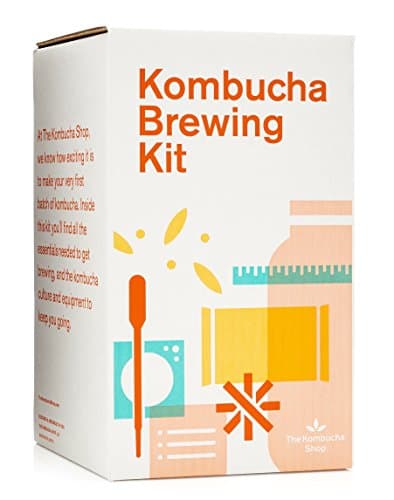
Fermentaholics Essentials Jun Kombucha Brewing Kit
A jun culture is a different organism community to a kombucha SCOBY, and it will not appear by feeding a kombucha culture honey — this is the way to start jun properly.
Who it is for. Someone who has read that jun is lighter and faster, and wants the culture that actually does that.
Published specifications
Culture
USDA Certified Organic jun culture
Feedstock
Green tea and honey, not black tea and sugar
Kit type
Essentials — jar, cover, band, culture
Certification
USDA Certified Organic
Source: Fermentaholics published Jun kit listing, fermentaholics.com/product/essentials-jun-kombucha-brewing-kit/, retrieved 2026-09-01
Rubric — 7.2 / 10
Materials8/10 · weight 28%
Documentation6/10 · weight 22%
Capacity fit7/10 · weight 16%
Cleaning8/10 · weight 18%
Value7/10 · weight 16%
What it gets right
A jun culture bought as a jun culture is the only reliable way to get one — converting a kombucha SCOBY to honey is a well-known way to weaken it
Same Essentials structure as the kombucha kit, so the jar and cover are the parts you already understand
Jun ferments cooler and faster than kombucha, which suits a house that never gets to 78F
What it costs you
Honey is meaningfully more expensive per batch than cane sugar, and jun wants a lot of it
Fewer published details than the kombucha kits from the same maker
No tea, sugar, honey or pH strips included
Skip it if. You have not brewed kombucha yet. Jun is less forgiving of a cold room and a weak starter; the ordinary kombucha route teaches the same skills more cheaply.
It is worth it if you own none of the pieces, because buying a jar, a culture, tea and sugar separately usually costs about the same and takes four orders instead of one. It is poor value if you already own a gallon jar, since the glass is the largest single cost in most kits.
What is the difference between a cheap kit and an expensive one?+
Almost entirely the instruments and the starter tea. Cheaper kits ship a jar, a cover and a culture. More expensive kits add pH strips, a temperature strip and a pipette, and tend to ship a larger measured volume of mature starter tea, which gives a first batch more acid protection from day one.
Can I make kombucha without a kit?+
Yes. A one-gallon glass jar, a tight-weave cloth and a rubber band, black tea, plain white sugar and a live culture with starter tea is the entire requirement. A kit is a convenience, not a technology.
How long does a kit's culture last?+
Indefinitely, if you keep feeding it. A kombucha culture is reused batch after batch and grows a new pellicle each time. The one-time purchase in a kit is the last culture most people ever buy, which is why the quality of that first culture matters more than the box it came in.
Do kits include bottles?+
None of the kits compared here do. Every one of them ends at the first fermentation. Bottles that can hold carbonation pressure are a separate purchase.
The Craft A Brew kombucha kit on published contents: the Basic kit versus the maker's own kit, the gallon jar, and the starter liquid volume nobody publishes.
Top pick · Craft a Brew Kombucha Basic Starter Kit (1 Gallon)