What you need to make kombucha, and what you do not
Six items are required. Four more are genuinely useful. Everything else sold for kombucha is optional, and some of it is actively unhelpful.
By Scooter M.·Published September 1, 2026 · Updated October 18, 2026
The short answer
You need six things: a one-gallon glass jar, a tight-weave cloth and band, a live culture with starter tea, plain black tea, plain white sugar, and bottles that can hold pressure. Everything else on this page is an improvement, not a requirement.
The six required items
A one-gallon glass jar, wide-mouthed. Glass is inert at kombucha's pH and lets you see the culture. Wide matters because the pellicle grows to the full width of the surface and has to come back out. What size jar covers scaling up.
A tight-weave cloth and a rubber band. Not a lid. The first fermentation needs air exchange, and the weave has to be tight enough to keep fruit flies out. Muslin, a clean tea towel or tight cotton all work; cheesecloth on its own is usually too open.
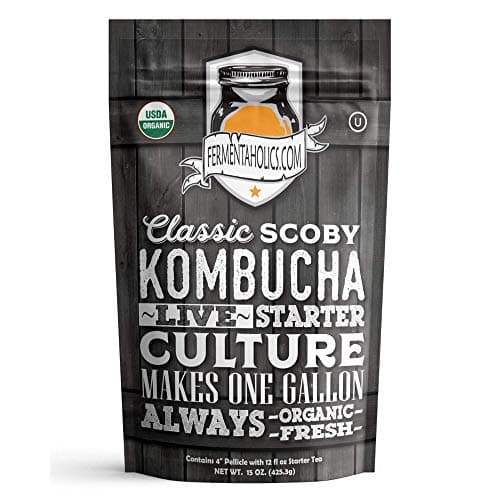
A live culture with starter tea. The one item with no substitute. Aim for roughly ten percent of the batch volume in starter tea — about 12 to 13 oz for a gallon.
Plain black tea. True tea, from Camellia sinensis. Herbal infusions are not tea and do not supply what the culture needs. Tea and sugar has the detail.
Plain white cane sugar. Ordinary granulated sugar. Not honey, not a zero-calorie sweetener — the culture eats the sugar, so a sweetener it cannot metabolize simply stalls the ferment.
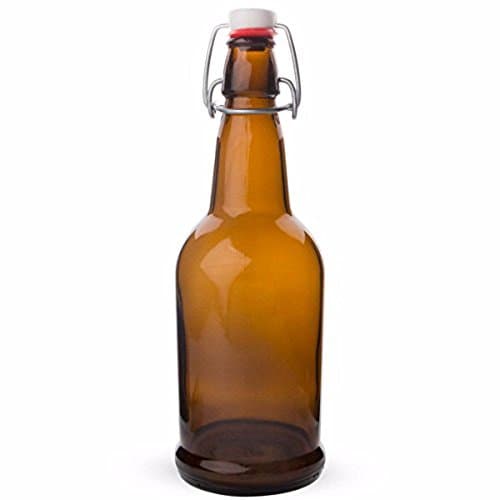
Bottles that hold pressure. Only if you want carbonation, but almost everyone does. This is the item kits leave out. Swing-top bottles.
Four things that are not required but earn their place
Ranked by how much difference each makes to a first year of brewing.
Item
What it solves
Worth it?
pH strips
Whether the batch has acidified enough to be safe
Yes, immediately
Adhesive temperature strip
Whether the liquid is in the 75-85 F band
Yes, immediately
A second jar
A SCOBY hotel, or two offset batches
By month two
Heat mat and controller
A room that sits below 70 F
Only if you have that problem
The picks
The three purchases that cover the list
A jar with the cover already in the box, a culture with its starter tea measured, and the one instrument no kitchen already has. Tea and sugar come from a supermarket.
Score7.7no photo yet
Fermentaholics
Printed Gallon Kombucha Glass Jar
A gallon jar that arrives with the muslin cover, the band and a temperature strip already in the box, which is the whole non-culture half of a first batch.
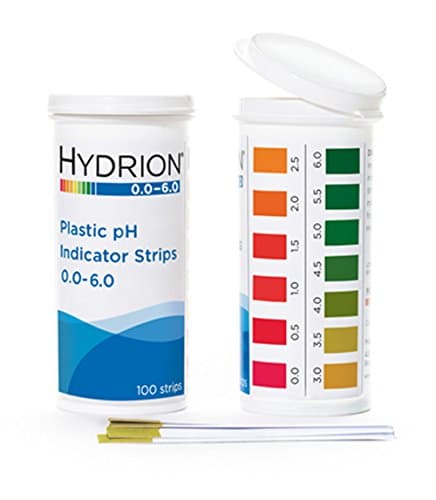
A 0.0 to 6.0 range in 0.5 steps, which puts four separate color matches inside the 2.5 to 3.5 window kombucha lives in — a 1-to-14 strip gives you one.
#ad No live price feed yet, so no number is shown rather than a stale one. How this is funded.
What you can skip
An airlock. Kombucha's first fermentation is aerobic — the culture needs air. An airlock is the right tool for beer and wine and the wrong one here.
A hydrometer. Useful for beer, where you care about attenuation. For kombucha, pH and taste tell you far more, and a hydrometer sample is a sample you have to remove from the jar.
Metal utensils, mostly. Brief contact with stainless is fine and commercial breweries are made of it. Prolonged contact with unknown metals is not. A plastic or wooden spoon avoids the question entirely.
Special "kombucha" sugar and tea. Plain black tea and plain white sugar are what the culture is adapted to. Premium versions of either are a preference, not an upgrade.
This list assumes you are starting from an ordinary kitchen. If you are not — if you already ferment something else — the list gets much shorter and one item on it becomes actively unhelpful. Brewing kombucha when you already brew beer goes through a homebrew shelf line by line, including why the airlock in the drawer is the wrong tool here and what to do about no-rinse sanitizer.
Heads up: some links on this page are affiliate links. If you buy through one we may earn a commission at no extra cost to you. It never changes a ranking, and we take no payment for placement. The full version.
The short answer
Quick picks
Ranked on the published rubric. Every row jumps to that product's full write-up below; the button goes straight to Amazon.
#
Product
Best for
Score
Price
1
Score7.7
Fermentaholics
Printed Gallon Kombucha Glass Jar
A gallon jar that arrives with the muslin cover, the band and a temperature strip already in the box, which is the whole non-culture half of a first batch.
A 0.0 to 6.0 range in 0.5 steps, which puts four separate color matches inside the 2.5 to 3.5 window kombucha lives in — a 1-to-14 strip gives you one.
A gallon jar that arrives with the muslin cover, the band and a temperature strip already in the box, which is the whole non-culture half of a first batch.
Who it is for. A first-time brewer, or anyone who has learned that the fewer parts a fermentation vessel has, the fewer places a batch can go wrong.
Published specifications
Capacity
1 gallon
Material
Glass
Included
Muslin cover, rubber band, temperature strip
Spigot
None
Dimensions
Not published
Mouth diameter
Not published
Source: Fermentaholics published jar listing contents, fermentaholics.com/product/printed-gallon-kombucha-glass-jar-2-pack/, retrieved 2026-09-01
Rubric — 7.7 / 10
Materials8/10 · weight 28%
Documentation5/10 · weight 22%
Capacity fit8/10 · weight 16%
Cleaning9/10 · weight 18%
Value9/10 · weight 16%
What it gets right
The temperature strip in the box means the jar tells you its own temperature from day one
Muslin breathes and blocks fruit flies, which is exactly what a kombucha cover has to do and what a solid lid does not
No spigot means no seal, no gasket and nothing to disassemble — the easiest vessel here to actually clean
The cheapest way into a proper gallon vessel
What it costs you
No published dimensions at all
No volume markers, so the starter reserve is eyeballed
No tap, so tasting means dipping and bottling means lifting
Skip it if. You want to draw a sample without opening the jar. A plain jar has to be opened every time you taste it.
#ad No live price feed yet, so no number is shown rather than a stale one. How this is funded.
#2 · A one-gallon first batch
Fermentaholics Organic Kombucha SCOBY with 12 fl oz Starter Tea
A hand-selected pellicle with twelve fluid ounces of mature starter tea, measured against the maker’s own published ten percent rule for a gallon.
Who it is for. Anyone starting a standard one-gallon batch who wants the starter tea measured for them.
Published specifications
Batch size
One gallon
Starter tea volume
12 fl oz of mature, active starter tea
Pellicle
Hand-selected
Starter tea ingredients
Organic cane sugar, filtered water, organic black tea, live cultures
Certification
USDA Certified Organic, Kosher, Non-GMO, vegan
Production
Grown in the maker’s licensed lab
Maker’s dosing rule
“the rule of thumb is to use 10% starter tea per batch size”
Source: Fermentaholics published SCOBY specification (12 fl oz starter tea, 1-gallon dosing, ingredients, certifications) and its published 10 percent starter rule, retrieved 2026-09-01
Rubric — 8.5 / 10
Materials9/10 · weight 28%
Documentation9/10 · weight 22%
Capacity fit8/10 · weight 16%
Cleaning8/10 · weight 18%
Value8/10 · weight 16%
What it gets right
12 fl oz against a 128 oz gallon is 9.4 percent, within a rounding error of the maker’s own 10 percent rule — the quantity matches the instruction
Starter tea is the part that actually acidifies a new batch and protects it from mold; the pellicle is mostly a raft
Ingredients of the starter tea are published, which almost no culture seller does
Certified organic, kosher, non-GMO and vegan are stated together
What it costs you
A live culture in transit is a live culture in transit — heat and delay are real risks nobody controls
No stated shelf life once it arrives
You still need tea, sugar and a jar
Skip it if. You are brewing half a gallon. Buy the half-gallon version instead; a gallon’s worth of starter in a half-gallon batch drives the acidity too far, too fast.
A 0.0 to 6.0 range in 0.5 steps, which puts four separate color matches inside the 2.5 to 3.5 window kombucha lives in — a 1-to-14 strip gives you one.
Who it is for. Every kombucha brewer. This is the cheapest instrument on the site and the one that answers the safety question.
#ad No live price feed yet, so no number is shown rather than a stale one. How this is funded.
#4 · Second ferment, one serving at a time
EZ Cap Swing Top Bottles, Amber Glass, 16 oz (Case of 12)
The only bottle here with a published pressure rating — 100 PSI — in amber glass, which is the combination a second ferment actually asks for.
Who it is for. Anyone doing a second ferment who wants a bottle with a number behind it rather than a shape that looks strong.
Published specifications
Capacity
16 oz
Glass color
Amber
Pressure rating
“Pressure rated to 100 PSI which means they can easily handle the carbonation of soda pop and hard seltzer”
Case quantity
12 bottles, includes 12 swing tops
Closure
Reusable swing top; also accepts a 26 mm pry-off crown cap
Maker’s note
“These swing tops are designed to be primarily sealed with a crown cap closure for long term storage.”
Dimensions
Not published
Source: MoreBeer published EZ Cap product specification (capacity, pressure rating, case contents, crown cap compatibility), morebeer.com/products/ez-cap-swing-top-bottles-amber-glass-16-oz-case-12, fetched 2026-09-01
Rubric — 8.3 / 10
Materials9/10 · weight 28%
Documentation9/10 · weight 22%
Capacity fit8/10 · weight 16%
Cleaning7/10 · weight 18%
Value8/10 · weight 16%
What it gets right
A published 100 PSI rating is the single most useful number in this whole category, and almost nobody publishes one
Amber glass blocks the light that degrades a bottle sitting out on a counter through a second ferment
The dual finish means you can crown-cap a batch you want to leave for months and swing-top the ones you will drink this week
16 oz is one serving, so a bottle gets opened once and drunk rather than losing its carbonation over three days
What it costs you
Swing-top gaskets perish, and a tired gasket is the commonest cause of a flat second ferment
No dimensions published, so fitting twelve of them on a fridge shelf is a measuring job when they arrive
Crown caps are sold separately if you want the long-storage option the maker recommends
Skip it if. You want to see the color of the finished drink. Amber hides it; the clear version of the same bottle does not.
A one-gallon wide-mouth glass jar, a tight-weave cloth and rubber band, a live culture with starter tea, plain black tea, plain white cane sugar, and pressure-rated bottles if you want carbonation. pH strips and a temperature strip are strongly recommended.
Do I need an airlock for kombucha?+
No. Kombucha's first fermentation is aerobic and the culture needs air exchange, so the vessel is covered with cloth rather than sealed. An airlock is the right tool for beer and wine and the wrong one here.
Can I use metal utensils with kombucha?+
Brief contact with stainless steel is fine, and commercial kombucha is made in stainless vessels. Prolonged contact with unknown or reactive metals is what to avoid. A plastic or wooden spoon sidesteps the question.
What kind of cloth should I cover the jar with?+
A tight-weave cotton: muslin, a clean tea towel or a tight cotton square. It has to breathe but the weave must be close enough to keep fruit flies out, which is why single-layer cheesecloth is usually too open.
Do I need a special sugar for kombucha?+
No. Plain white granulated cane sugar is what the culture is adapted to. Raw and unrefined sugars work but ferment differently, and non-sugar sweeteners are not food for the culture at all.
Sources
Every specification cited on this page came from one of these documents, retrieved on the date shown against the product it belongs to.