One distinction settles nearly every case, and it is not color. Mold sits proud of the surface and is dry. Everything a healthy culture does is wet and flat.
Mold is fuzzy, dry-looking and sits raised above the liquid, usually in round spots that are blue, green, black or a chalky white. A new pellicle is smooth, wet and flat against the surface. If it is genuinely fuzzy, the batch and the culture both go — no rescuing, no trimming.
The one distinction that settles it
Texture and position, not color. Mold grows on the surface, in three dimensions, and looks dry and fuzzy in the way bread mold does. A pellicle grows at the surface, flat, wet and continuous with the liquid.
Color is a poor guide because a healthy pellicle can carry brown tea staining, dark yeast patches and pale uneven areas, all of which look wrong to someone who has not seen one before.
What you are looking at.
What you see
Mold?
What it is
Fuzzy round spots sitting above the surface
Yes
Mold. Bin the batch and the culture.
Dry, powdery blue, green or black patches
Yes
Mold.
Chalky white fuzz with visible texture
Yes
Mold — the one people mistake for a pellicle.
A smooth pale film across the whole surface
No
A new pellicle forming.
Brown stringy strands hanging below
No
Yeast. Normal and healthy.
Dark brown flat patches on the pellicle
No
Tea staining or yeast. Flat and wet.
Bubbles trapped under the surface layer
No
Carbon dioxide. A good sign.
A wrinkled, lumpy, uneven pellicle
No
Normal. Pellicles form unevenly when a jar is moved.
If it is mold
The whole batch goes, and so does the culture. This is the one place on this site where there is no nuance and no salvage:
Pour the liquid away. Do not keep any of it as starter tea.
Discard the pellicle, including any part of it that looks unaffected. Mold has a network you cannot see.
Do not cut the moldy part off. There is no clean part.
Wash the vessel thoroughly with hot soapy water and rinse well, or run it through a dishwasher if it is dishwasher safe.
Start again with a fresh culture and generous starter tea.
It feels wasteful to bin a gallon over a coin-sized spot. Do it anyway. This is the same rule as the no-fabricated-anything rule elsewhere on this site: the cost of being wrong is much higher than the cost of starting over.
Why it happened
Mold appears when a batch spends too long above about pH 4.2 — the window before the culture has produced enough acid to defend itself. Four things push a batch into that window.
Not enough starter tea. The single biggest cause. Starter tea drops the pH on contact; a thin pour means a longer vulnerable window. Ten percent of the batch volume is the published rule.
Too cold. A slow culture takes longer to acidify. Temperature compounds every other cause.
A weak or damaged culture. Often one added to tea that was still warm.
Airborne spores landing on the surface. Which is what the cloth cover is for, and why a jar next to a fruit bowl or a bin is a jar in the wrong place.
The picks
What prevents it, and what replaces it
pH strips make the vulnerable window visible instead of invisible. A culture with published starter tea shortens it. A temperature strip tells you whether the room is making it longer.
Micro Essential Lab
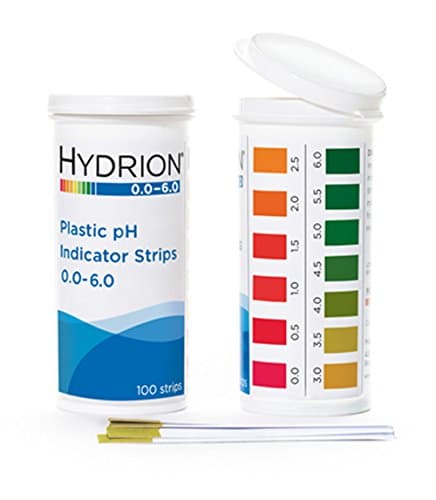
Hydrion 9200 Spectral pH Strips, 0.0-6.0
A 0.0 to 6.0 range in 0.5 steps, which puts four separate color matches inside the 2.5 to 3.5 window kombucha lives in — a 1-to-14 strip gives you one.
Use the full ten percent of starter tea. This is the highest-leverage single change.
Get the batch above 75 F. Warm cultures acidify fast.
Test the pH on day three. Below 4.2 and you are past the risky part.
Keep the cover taut and the weave tight, and keep the jar away from bins, compost and fruit bowls.
Do not add fruit, juice or flavorings to the first fermentation. They belong in the bottle.
Keep a SCOBY hotel, so a lost batch costs a fortnight rather than a fortnight plus an order.
Heads up: some links on this page are affiliate links. If you buy through one we may earn a commission at no extra cost to you. It never changes a ranking, and we take no payment for placement. The full version.
The short answer
Quick picks
Ranked on the published rubric. Every row jumps to that product's full write-up below; the button goes straight to Amazon.
#
Product
Best for
Score
Price
1
Micro Essential Lab
Hydrion 9200 Spectral pH Strips, 0.0-6.0
A 0.0 to 6.0 range in 0.5 steps, which puts four separate color matches inside the 2.5 to 3.5 window kombucha lives in — a 1-to-14 strip gives you one.
A 0.0 to 6.0 range in 0.5 steps, which puts four separate color matches inside the 2.5 to 3.5 window kombucha lives in — a 1-to-14 strip gives you one.
Who it is for. Every kombucha brewer. This is the cheapest instrument on the site and the one that answers the safety question.
#ad No live price feed yet, so no number is shown rather than a stale one. How this is funded.
#2 · A one-gallon first batch
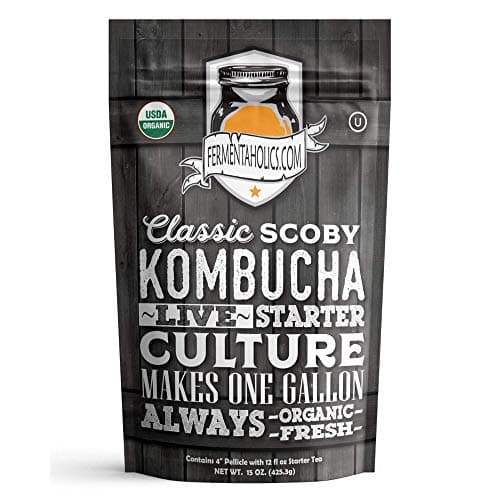
Fermentaholics Organic Kombucha SCOBY with 12 fl oz Starter Tea
A hand-selected pellicle with twelve fluid ounces of mature starter tea, measured against the maker’s own published ten percent rule for a gallon.
Who it is for. Anyone starting a standard one-gallon batch who wants the starter tea measured for them.
Published specifications
Batch size
One gallon
Starter tea volume
12 fl oz of mature, active starter tea
Pellicle
Hand-selected
Starter tea ingredients
Organic cane sugar, filtered water, organic black tea, live cultures
Certification
USDA Certified Organic, Kosher, Non-GMO, vegan
Production
Grown in the maker’s licensed lab
Maker’s dosing rule
“the rule of thumb is to use 10% starter tea per batch size”
Source: Fermentaholics published SCOBY specification (12 fl oz starter tea, 1-gallon dosing, ingredients, certifications) and its published 10 percent starter rule, retrieved 2026-09-01
Rubric — 8.5 / 10
Materials9/10 · weight 28%
Documentation9/10 · weight 22%
Capacity fit8/10 · weight 16%
Cleaning8/10 · weight 18%
Value8/10 · weight 16%
What it gets right
12 fl oz against a 128 oz gallon is 9.4 percent, within a rounding error of the maker’s own 10 percent rule — the quantity matches the instruction
Starter tea is the part that actually acidifies a new batch and protects it from mold; the pellicle is mostly a raft
Ingredients of the starter tea are published, which almost no culture seller does
Certified organic, kosher, non-GMO and vegan are stated together
What it costs you
A live culture in transit is a live culture in transit — heat and delay are real risks nobody controls
No stated shelf life once it arrives
You still need tea, sugar and a jar
Skip it if. You are brewing half a gallon. Buy the half-gallon version instead; a gallon’s worth of starter in a half-gallon batch drives the acidity too far, too fast.
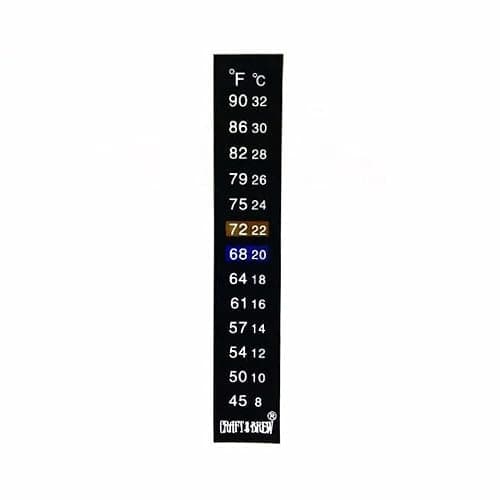
Craft a Brew Fermometer Adhesive Strip Thermometer
A four-inch liquid crystal strip that sticks to the glass and reads the liquid rather than the air, which is the distinction that matters.
Who it is for. Every brewer. This is the cheapest way to stop guessing what temperature the batch is at.
Published specifications
Size
Approximately 0.75 x 4 in
Reads
Fahrenheit and Celsius
Application
External fermenter surface
Compatible surfaces
Glass, plastic and stainless steel fermenters
How it works
“changes color to display the current temperature of the fermenting liquid inside the vessel”
Temperature range
Not published by this maker. Comparable fermentation strips are sold in bands such as 46-82 F, 57-90 F and 46-93 F.
Accuracy
Not published
Sold as
A 5 pack on the Amazon listing; the maker's own store lists it as a single strip
Source: Craft a Brew published Fermometer specification (size, display units, compatible surfaces, operating principle), craftabrew.com/products/fermometer-adhesive-strip-thermometer, fetched 2026-09-01. Comparable-strip ranges from retailer listings, cited as comparisons only.
Rubric — 7.4 / 10
Materials7/10 · weight 28%
Documentation5/10 · weight 22%
Capacity fit8/10 · weight 16%
Cleaning8/10 · weight 18%
Value10/10 · weight 16%
What it gets right
It reads through the glass, so it tells you what the kombucha is at rather than what the shelf is at — those differ by several degrees on a sunny afternoon
It costs less than a cup of coffee and never needs a battery
It sticks to glass, plastic and stainless, so it moves with you if you change vessels
Always visible, which means you actually look at it
What it costs you
Neither range nor accuracy is published for this specific strip
Liquid crystal strips read in bands, so you get “about 76” rather than 76.2
The two listings disagree on whether it is reusable — the Amazon listing calls it reusable, the maker's own spec page says nothing about removing or reapplying it
Skip it if. You want a logged, numeric record. A strip is a glance, not a measurement you can write down with confidence.
Texture and position. Mold is fuzzy, dry-looking and sits raised above the liquid, usually in round spots. A new pellicle is smooth, wet and flat against the surface. Color is not a reliable guide, because healthy pellicles stain brown and grow unevenly.
Can I save a kombucha batch with mold?+
No. The whole batch goes and so does the culture, including any part of the pellicle that looks unaffected. Do not cut the moldy section off — mold has a network you cannot see — and do not keep any of the liquid as starter tea.
What causes mold in kombucha?+
A batch spending too long above about pH 4.2 before the culture has built its own acid protection. The usual causes are too little starter tea, a room that is too cold, a weakened culture, and airborne spores reaching an inadequately covered jar.
Is white film on kombucha always mold?+
No. A smooth, flat, wet white film across the surface is usually a new pellicle. A flat wrinkled skin is often kahm yeast, which is harmless. Chalky white fuzz that sits proud of the surface is mold. The raised-and-dry test is the one that distinguishes them.
How do I stop kombucha from getting moldy?+
Use the full ten percent of starter tea, keep the batch above 75 F, check the pH is below 4.2 by day three, keep the cover taut with a tight weave, and keep the jar away from bins, compost and fruit bowls.
Sources
Every specification cited on this page came from one of these documents, retrieved on the date shown against the product it belongs to.