Beginners fail for two reasons: the room is too cold and the batch has no acid protection. A good beginner kit hands you an instrument for each.
By Scooter M.·Published September 1, 2026 · Updated October 18, 2026
The short answer
Pick the kit that includes pH strips and a temperature strip. Those two items cost the maker almost nothing and they are the difference between diagnosing a first batch and staring at it. Of the four here, two include both, one includes only a thermometer, and one includes neither.
How first batches actually fail
Nearly every failed first batch is one of two stories, and neither of them is complicated.
The first is a cold room. Kombucha wants roughly 75 to 85 F. A kitchen at 66 or 68 F does not stop the ferment, it slows it so much that after two weeks the jar still tastes like sweet tea and the brewer concludes the culture was dead. It was not. It was cold, and the person had no way of knowing because the thermometer was on the wall rather than on the glass.
The second is thin acid protection. A new batch is sweet, near-neutral tea, which is hospitable to a lot of organisms besides the one you want. The starter tea you pour in is what drops the pH immediately, and the culture then takes over. If the starter pour was small, or the room was cold so the culture worked slowly, the batch spends longer in that vulnerable window. That is when mold appears.
So what a beginner kit needs
A measured volume of starter tea, published in ounces. Fermentaholics publishes 12 fl oz for a gallon and states its own ten percent rule. The Kombucha Shop publishes one cup. A kit that says only "starter liquid" is asking you to trust a quantity nobody stated.
pH strips. Under a dollar of value, and the only instrument that answers "has this acidified yet". See pH testing.
A temperature strip on the jar. It reads the liquid through the glass rather than reading the room, which is exactly the distinction a stalled batch turns on.
A cloth cover, not a lid. The first fermentation needs air exchange. Every kit here gets this right, but plenty of improvised setups do not.
The four, side by side
Compiled from each maker's own published contents list, 2026-09-01.
Kit
Starter tea published
pH strips
Thermometer
Tea + sugar
Fermentaholics Complete
12 fl oz
Yes
Yes
Yes
The Kombucha Shop
1 cup
Yes
Yes
Yes
Craft a Brew Starter
Not stated
No
No
Yes
Fermentaholics Essentials
Not stated
No
Yes
No
Two of the four give a beginner both instruments. The Craft a Brew kit is a genuinely good jar and a live culture with less around it — a fine purchase with a vial of pH strips added to the same order. The Essentials kit is the cheapest way to a live organic culture, and it assumes you already have tea and sugar in the cupboard, which most people do.
The picks
The three we would put in front of a beginner
Ranked on the published rubric. All three ship a live culture and a gallon jar; they differ on the instruments and on how much starter tea is stated.
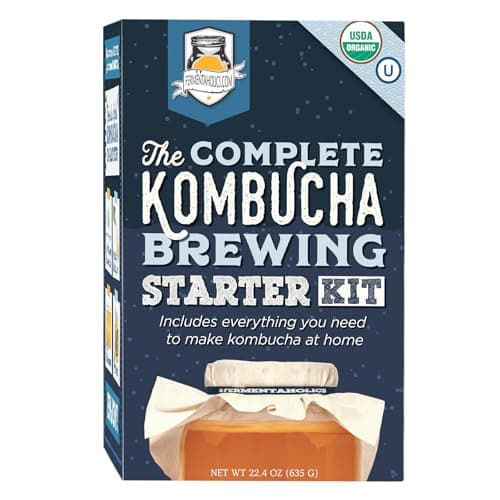
Fermentaholics
Complete Kombucha Brewing Starter Kit (1 Gallon)
Twelve fluid ounces of mature starter tea with the pellicle, measured against the maker’s own published ten percent rule — the fullest kit of the group.
The only kit here that ships pH strips, a pipette and a temperature gauge in the box, which is the difference between brewing kombucha and guessing at it.
#ad No live price feed yet, so no number is shown rather than a stale one. How this is funded.
What no beginner kit includes
Bottles. Every kit on this page ends when the first fermentation ends, and none of them contains anything that can hold carbonation pressure. Two weeks after the kit arrives you will have a gallon of finished kombucha and nowhere to put it. Order swing-top bottles with the kit, not after it.
All four kits here brew kombucha. If the reason you are shopping is a cold kitchen, a caffeine problem or a household that has already tried kombucha and declined, kits for the ferments that are not kombucha covers jun, water kefir and milk kefir and what each one asks of you weekly.
Two of the four kits above come from the same maker, and that maker sells a fuller box than either of them. The Kombucha Shop, reviewed on what it publishes compares its whole range on published contents, including the Deluxe kit that ships six bottles, a funnel and a brush with the brewing gear.
The leanest kit on this page has a page of its own too, and it needs one: the Craft A Brew kit review explains that two kits are sold under almost the same name, and that only one of them publishes tea and sugar in the box.
Heads up: some links on this page are affiliate links. If you buy through one we may earn a commission at no extra cost to you. It never changes a ranking, and we take no payment for placement. The full version.
The short answer
Quick picks
Ranked on the published rubric. Every row jumps to that product's full write-up below; the button goes straight to Amazon.
#
Product
Best for
Score
Price
1
Fermentaholics
Complete Kombucha Brewing Starter Kit (1 Gallon)
Twelve fluid ounces of mature starter tea with the pellicle, measured against the maker’s own published ten percent rule — the fullest kit of the group.
The only kit here that ships pH strips, a pipette and a temperature gauge in the box, which is the difference between brewing kombucha and guessing at it.
Twelve fluid ounces of mature starter tea with the pellicle, measured against the maker’s own published ten percent rule — the fullest kit of the group.
Who it is for. Someone who wants the culture to be the strongest part of the kit rather than the jar.
Published specifications
Batch size
1 gallon
Culture
Kombucha starter culture: pellicle plus 12 fl oz of mature starter tea, measured for a 1-gallon batch
Jar
1-gallon brew jar
Tea and sugar
Tea blend, organic cane sugar, reusable cotton tea bag
Measurement gear
Adhesive thermometer, pH strips, pipette
Cover
Cotton cloth cover and rubber band
Certification
USDA Certified Organic; also stated Kosher, Non-GMO and vegan
Starter tea ingredients
Organic cane sugar, filtered water, organic black tea, live cultures
Documentation
Detailed instructions and a flavoring guide
Source: Fermentaholics published kit contents and culture specification, fermentaholics.com/product/the-complete-kombucha-brewing-starter-kit/, retrieved 2026-09-01
Rubric — 8.0 / 10
Materials8/10 · weight 28%
Documentation9/10 · weight 22%
Capacity fit8/10 · weight 16%
Cleaning7/10 · weight 18%
Value8/10 · weight 16%
What it gets right
12 fl oz against a 128 oz gallon is 9.4 percent, within a rounding error of the maker’s own 10 percent rule — the quantity matches the instruction
Both instruments a first batch needs, thermometer and pH strips, are in the box
The starter tea’s ingredients are published, which almost no culture seller does
USDA Organic, Kosher, Non-GMO and vegan claims are all stated together rather than implied
What it costs you
No jar dimensions published
The jar is plain glass with no volume markers, so the 10 percent reserve is a judgment call
Nothing in the kit addresses bottling — you finish the batch with nowhere to put it
Skip it if. You want to bottle at the end of week one. Nothing here holds pressure; budget for swing-top bottles at the same time.
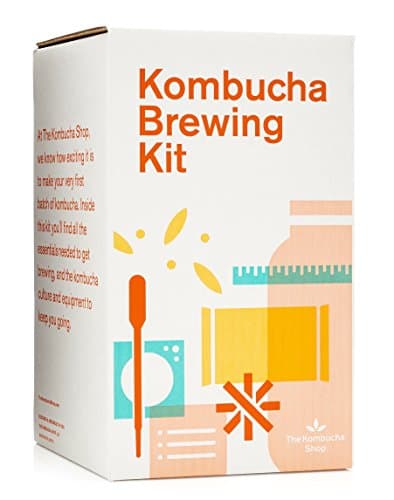
The only kit here that ships pH strips, a pipette and a temperature gauge in the box, which is the difference between brewing kombucha and guessing at it.
Who it is for. Someone brewing their first batch who wants the measurement gear included rather than ordered separately three days in.
Published specifications
Batch size
1 gallon
Jar
One Gallon Brew Jar with plastic lid, thick American glass, screen-printed Brew Notes on the side
Culture
Organic kombucha culture plus 1 cup liquid starter
Culture aging
Stated to ferment for a minimum of 6 weeks before shipping
Tea
Organic loose leaf black and oolong, with a reusable cotton tea bag
Measurement gear
pH test strips, pipette, temperature gauge, wet-erase marker
Cover
Cotton cover and rubber band
Certification
USDA Organic Certified
Spigot
None. The jar takes a plastic lid, not a tap.
Source: The Kombucha Shop published kit contents and product description, thekombuchashop.com/products/kombucha-brewing-kit, fetched 2026-09-01
Rubric — 7.4 / 10
Materials8/10 · weight 28%
Documentation7/10 · weight 22%
Capacity fit8/10 · weight 16%
Cleaning7/10 · weight 18%
Value7/10 · weight 16%
What it gets right
pH strips and a pipette in the box mean you can answer “is this safe yet” on day three instead of guessing
The culture is stated to ferment a minimum of six weeks before it ships, which is a long lead time and shows in how fast a first batch takes off
Brew Notes screen-printed on the glass keep the start date on the jar rather than on a sticky note
USDA Organic certification covers the tea, sugar and culture together
What it costs you
No jar dimensions are published anywhere, so you cannot check it against a shelf before ordering
No spigot, so bottling means lifting a full gallon and siphoning or pouring
The most expensive of the four kits here, and some of that is the marker
Skip it if. You already own a gallon jar. You are paying for glass you have, and a culture-plus-ingredients pack costs far less.
#ad No live price feed yet, so no number is shown rather than a stale one. How this is funded.
FAQ
Questions people actually ask
What is the easiest kombucha kit for a complete beginner?+
One that includes both pH strips and a temperature strip, because those two instruments diagnose the only two things that commonly go wrong. The Fermentaholics Complete kit and The Kombucha Shop kit both publish those items in their contents lists.
How long before a beginner kit produces drinkable kombucha?+
Seven to fourteen days for the first fermentation, and Craft a Brew publishes exactly that window while naming temperature as the variable. A warm kitchen finishes near the short end; a cool one can take longer than two weeks.
Do I need to buy bottles separately?+
Yes. None of the beginner kits compared here include bottles, and nothing in them can hold carbonation pressure. Buy pressure-rated swing-top bottles at the same time as the kit.
What if my kit's SCOBY arrives looking strange?+
A shipped pellicle often looks pale, wrinkled or lumpy, and it commonly sinks rather than floating. None of that is a problem on its own. What matters is that the starter tea smells sour and vinegary rather than putrid, and that the batch drops below about pH 4.2 in the first couple of days.
Is an expensive kit better than a cheap one?+
Only in the sense that the more expensive kits here include measuring instruments and more stated starter tea. The culture, the jar, the tea and the sugar are broadly the same purchase at every price.
Sources
Every specification cited on this page came from one of these documents, retrieved on the date shown against the product it belongs to.
What you buy once versus what you buy repeatedly, the published yields that decide the running cost, and when brewing your own is honestly not worth it.
The Craft A Brew kombucha kit on published contents: the Basic kit versus the maker's own kit, the gallon jar, and the starter liquid volume nobody publishes.