They look alike in a jar, they smell alike by week three, and one of them has a published legal standard while the other has none. That difference explains most of the rest.
By Scooter M.·Published September 6, 2026 · Updated September 21, 2026
The short answer
Both are acetic ferments and both grow a cellulose mother, but only vinegar has a legal standard: FDA guidance states natural vinegars “normally contain in excess of 4 grams of acetic acid per 100 mL”, and diluted vinegar must be labeled and in no case fall below 4 percent. Kombucha has no such definition. A kombucha batch left too long becomes very sour, but it does not automatically become a 4 percent vinegar.
Two ferments, one family
The reason these two get compared at all is that they are genuinely related. Both are driven substantially by acetic acid bacteria, both build a rubbery cellulose raft on the surface, and both end up sharp. Anyone who has looked at a jar of raw apple cider vinegar with the mother in it has seen something that looks a great deal like a kombucha pellicle.
The processes diverge at the feedstock and at the finish. Apple cider vinegar runs on apple juice: yeast turns the sugar into alcohol, then acetic acid bacteria turn the alcohol into acetic acid, and the target is a strongly acidic condiment. Kombucha runs on sweetened tea, both stages happen together in the same jar, and the target is a drink you stop well before it gets that far.
That last clause is the whole difference. Vinegar is a ferment taken to completion. Kombucha is a ferment interrupted on purpose.
Side by side
Kombucha figures are the working ranges used across this site; the vinegar figure is the published FDA compliance guidance.
Kombucha
Apple cider vinegar
Feedstock
Sweetened black or green tea
Apple juice or hard cider
Stages
One jar, both stages together
Alcoholic then acetic, usually separated
Typical time
7-14 days
Weeks to months
Finished acidity
Roughly pH 2.5-3.5
In excess of 4 g acetic acid per 100 mL
Legal definition
None
FDA compliance policy guide 525.825
Surface culture
Pellicle
Mother of vinegar
Intended use
A drink
A condiment and cleaner
Carbonation
Yes, in a second ferment
No
One row deserves emphasis. Kombucha having no legal definition is not a scandal — most fermented foods do not — but it does mean that “this is basically vinegar” and “this is definitely not vinegar” are both unfalsifiable claims about a home batch unless somebody has actually measured the acetic acid in it, which almost nobody has.
pH and acidity are not the same measurement
This is where the comparison usually goes wrong, and it is worth being careful. pH measures how many hydrogen ions are free in the solution right now. Acidity — the 4 grams per 100 mL in the vinegar standard — measures how much acid is present in total, free or not.
Two liquids can sit at the same pH and contain very different quantities of acid, because different acids dissociate to different degrees. Kombucha carries acetic acid, but it also carries gluconic and other organic acids in proportions that vary with the culture, the tea and the temperature.
The practical consequence: a pH strip or a pH meter can tell you your kombucha is at 2.9. It cannot tell you the batch is 4 percent acetic acid, because that is a different measurement requiring a titration nobody does at home. Anyone who tells you their kombucha vinegar is “5 percent” on the strength of a pH reading has confused the two.
The picks
What you would actually buy
One culture makes both drinks — the difference is when you stop. So the purchase that matters is not a second culture, it is something that tells you where the batch is.
Fermentaholics
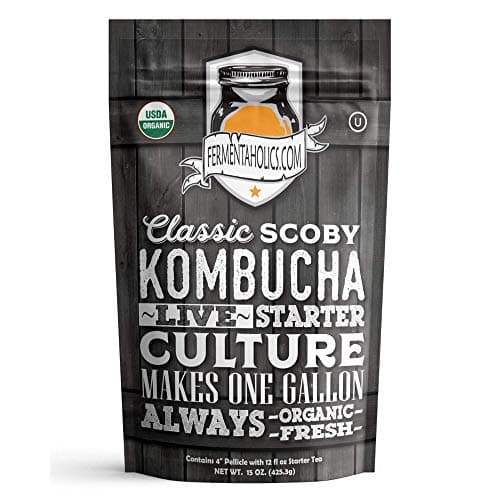
Organic Kombucha SCOBY with 12 fl oz Starter Tea
A hand-selected pellicle with twelve fluid ounces of mature starter tea, measured against the maker’s own published ten percent rule for a gallon.
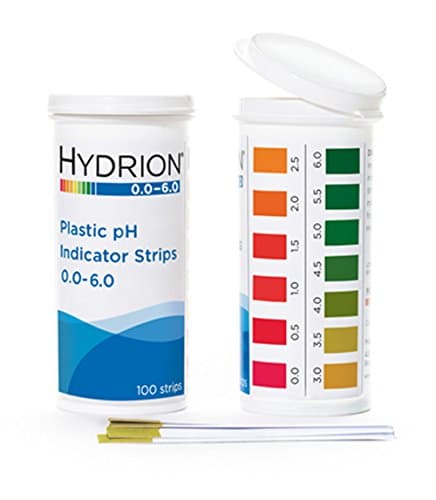
A 0.0 to 6.0 range in 0.5 steps, which puts four separate color matches inside the 2.5 to 3.5 window kombucha lives in — a 1-to-14 strip gives you one.
#ad No live price feed yet, so no number is shown rather than a stale one. How this is funded.
Apera Instruments
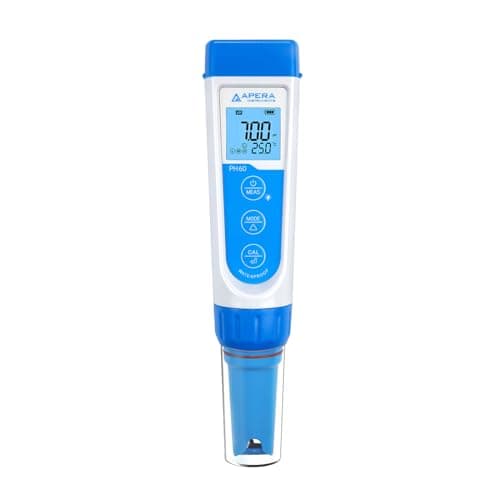
PH60 Premium Pocket pH Tester Kit (AI311)
The only meter here whose published accuracy — ±0.01 pH — is finer than the decision you are using it to make, with a probe you can replace instead of the whole instrument.
Leave a jar going and it keeps acidifying. By week three or four it is unpleasant to drink, it smells sharply of vinegar and it is doing genuinely useful things: it makes an excellent salad dressing base, it deglazes a pan, and it is a fine household cleaner for anything that is not stone.
That is worth knowing because it reframes the commonest beginner disaster. A batch you forgot about is not a failure; it is a different product. It only becomes waste if you pour it away. Why kombucha goes too sour covers how to stop it happening on purpose, and how to catch it earlier next time.
Two honest caveats. First, home kombucha vinegar is not a standardized product — you do not know its acid strength, so it should not be used where strength matters, and canning is the obvious case. Home canning recipes assume vinegar of a known percentage, and substituting an unmeasured ferment removes the safety margin the recipe was built on. Second, some of the strongest kombucha vinegar is also the most yeasty, and straining it makes it far more pleasant to keep.
Drinking one versus the other
People arrive at this comparison from two directions. Some want to know whether kombucha is just an expensive way to drink vinegar. Others have read about drinking diluted apple cider vinegar and wonder whether kombucha does the same job more pleasantly.
On the first: no, not really. A finished kombucha at pH 3 is roughly the acidity of orange juice territory rather than of a condiment, it retains residual sugar and tea compounds, and it carbonates. It tastes like a sour soft drink, not like diluted vinegar.
On the second, this site does not make health claims and will not start here. What can be said factually is that both are acidic, that dental enamel does not like sustained acid exposure regardless of the source, and that the sensible handling — dilute it, drink it with food, rinse with water afterward — is the same for both.
Can you swap the cultures?
Not usefully, and this is the same lesson as jun versus kombucha. A vinegar mother is adapted to converting alcohol in apple must; a kombucha culture is a community adapted to sweetened tea and carries the yeast half of the partnership too.
You can put a kombucha pellicle into hard cider and get something acidic, and people do. What you will not get is a predictable product, because the yeasts in the kombucha culture are now competing in a substrate they were not selected for. If you want cider vinegar, buy a vinegar mother. If you want kombucha vinegar, just leave your kombucha alone for another fortnight — it is the same culture doing the same thing, only further along.
If you want kombucha vinegar on purpose
The method is deliberate neglect, with two adjustments that make the result better than an accident.
Run a batch as normal, then keep going for another two to four weeks past drinkable, at the warm end of the range rather than the cool end — acetic acid bacteria are the half of the culture you are now favoring, and they work faster warm. Leave it uncovered by anything airtight, because that stage genuinely wants air; a cloth cover is correct throughout.
Then strain it. A long ferment produces a great deal of yeast sediment and a thick pellicle, and the finished liquid keeps far better and pours far more pleasantly once both are out. Bottle it in something you can seal, keep it somewhere dark, and it will hold for months — it is, after all, an environment almost nothing will grow in.
What you will not have is a number. There is no home method for measuring acetic acid concentration, so treat it as a strong, unstandardized vinegar: excellent on food, fine for cleaning, and never a substitute where a recipe specifies a percentage.
That is the short version. Making kombucha vinegar on purpose walks the whole process — why the jar stays under cloth the entire time, how to tell when it has crossed over, how to strain and store it, and why it must never go into a canning jar.
Heads up: some links on this page are affiliate links. If you buy through one we may earn a commission at no extra cost to you. It never changes a ranking, and we take no payment for placement. The full version.
The short answer
Quick picks
Ranked on the published rubric. Every row jumps to that product's full write-up below; the button goes straight to Amazon.
#
Product
Best for
Score
Price
1
Fermentaholics
Organic Kombucha SCOBY with 12 fl oz Starter Tea
A hand-selected pellicle with twelve fluid ounces of mature starter tea, measured against the maker’s own published ten percent rule for a gallon.
A 0.0 to 6.0 range in 0.5 steps, which puts four separate color matches inside the 2.5 to 3.5 window kombucha lives in — a 1-to-14 strip gives you one.
The only meter here whose published accuracy — ±0.01 pH — is finer than the decision you are using it to make, with a probe you can replace instead of the whole instrument.
Fermentaholics Organic Kombucha SCOBY with 12 fl oz Starter Tea
A hand-selected pellicle with twelve fluid ounces of mature starter tea, measured against the maker’s own published ten percent rule for a gallon.
Who it is for. Anyone starting a standard one-gallon batch who wants the starter tea measured for them.
Published specifications
Batch size
One gallon
Starter tea volume
12 fl oz of mature, active starter tea
Pellicle
Hand-selected
Starter tea ingredients
Organic cane sugar, filtered water, organic black tea, live cultures
Certification
USDA Certified Organic, Kosher, Non-GMO, vegan
Production
Grown in the maker’s licensed lab
Maker’s dosing rule
“the rule of thumb is to use 10% starter tea per batch size”
Source: Fermentaholics published SCOBY specification (12 fl oz starter tea, 1-gallon dosing, ingredients, certifications) and its published 10 percent starter rule, retrieved 2026-09-01
Rubric — 8.5 / 10
Materials9/10 · weight 28%
Documentation9/10 · weight 22%
Capacity fit8/10 · weight 16%
Cleaning8/10 · weight 18%
Value8/10 · weight 16%
What it gets right
12 fl oz against a 128 oz gallon is 9.4 percent, within a rounding error of the maker’s own 10 percent rule — the quantity matches the instruction
Starter tea is the part that actually acidifies a new batch and protects it from mold; the pellicle is mostly a raft
Ingredients of the starter tea are published, which almost no culture seller does
Certified organic, kosher, non-GMO and vegan are stated together
What it costs you
A live culture in transit is a live culture in transit — heat and delay are real risks nobody controls
No stated shelf life once it arrives
You still need tea, sugar and a jar
Skip it if. You are brewing half a gallon. Buy the half-gallon version instead; a gallon’s worth of starter in a half-gallon batch drives the acidity too far, too fast.
A 0.0 to 6.0 range in 0.5 steps, which puts four separate color matches inside the 2.5 to 3.5 window kombucha lives in — a 1-to-14 strip gives you one.
Who it is for. Every kombucha brewer. This is the cheapest instrument on the site and the one that answers the safety question.
The only meter here whose published accuracy — ±0.01 pH — is finer than the decision you are using it to make, with a probe you can replace instead of the whole instrument.
Who it is for. Someone brewing continuously, tracking a number over time, or pushing a batch toward vinegar and wanting to know exactly where it is.
Published specifications
Model
PH60, SKU AI311
Range
“-2.00 to 16.00 pH”
Accuracy
“±0.01 pH ±1 digit”
Resolution
“0.01/0.1 pH”
Temperature compensation
“Auto Temperature Compensation 0 to 50°C (32 to 122°F)”
“TWO YEARS for the instrument and SIX MONTHS for the probe”
Source: Apera Instruments published PH60 product specification (model/SKU, range, accuracy, resolution, ATC range, calibration points and recognized buffers, replaceable PH60-E probe, IP67 rating, battery type and 2000-hour life, kit contents, warranty terms), aperainst.com, retrieved 2026-09-06
Rubric — 8.4 / 10
Materials9/10 · weight 28%
Documentation10/10 · weight 22%
Capacity fit9/10 · weight 16%
Cleaning7/10 · weight 18%
Value6/10 · weight 16%
What it gets right
±0.01 pH published accuracy against a decision line at 4.2 — the instrument is an order of magnitude finer than the question, which is the right way round
Three-point automatic calibration with buffers in the box, so it arrives ready to be made trustworthy rather than merely switched on
The probe is a replaceable part with its own model number, so a dead electrode is a component failure and not a landfill event
IP67 and floatable, which is a sensible specification for a device used over an open jar
What it costs you
The published probe warranty is six months against two years for the instrument, which tells you honestly where the wear is
It needs storage solution and periodic recalibration. A meter left dry in a drawer for a year reads confidently and wrongly
It costs many times a vial of strips to answer a question strips already answer well enough for most brewers
Four AAA batteries and a case make it a thing you own, not a thing you keep next to the jar
Skip it if. You test once a batch to confirm the ferment is under 4.2. Strips do that for a fraction of the money and never need calibrating.
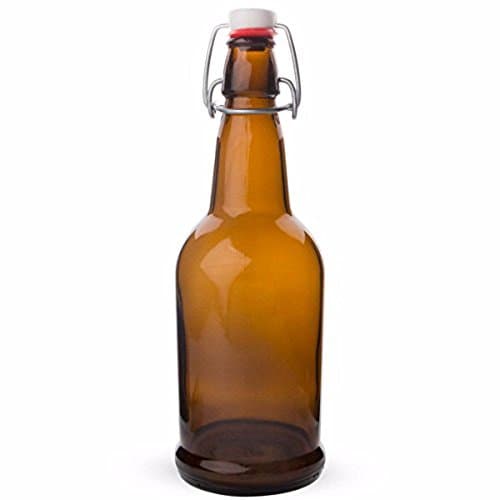
EZ Cap Swing Top Bottles, Amber Glass, 16 oz (Case of 12)
The only bottle here with a published pressure rating — 100 PSI — in amber glass, which is the combination a second ferment actually asks for.
Who it is for. Anyone doing a second ferment who wants a bottle with a number behind it rather than a shape that looks strong.
Published specifications
Capacity
16 oz
Glass color
Amber
Pressure rating
“Pressure rated to 100 PSI which means they can easily handle the carbonation of soda pop and hard seltzer”
Case quantity
12 bottles, includes 12 swing tops
Closure
Reusable swing top; also accepts a 26 mm pry-off crown cap
Maker’s note
“These swing tops are designed to be primarily sealed with a crown cap closure for long term storage.”
Dimensions
Not published
Source: MoreBeer published EZ Cap product specification (capacity, pressure rating, case contents, crown cap compatibility), morebeer.com/products/ez-cap-swing-top-bottles-amber-glass-16-oz-case-12, fetched 2026-09-01
Rubric — 8.3 / 10
Materials9/10 · weight 28%
Documentation9/10 · weight 22%
Capacity fit8/10 · weight 16%
Cleaning7/10 · weight 18%
Value8/10 · weight 16%
What it gets right
A published 100 PSI rating is the single most useful number in this whole category, and almost nobody publishes one
Amber glass blocks the light that degrades a bottle sitting out on a counter through a second ferment
The dual finish means you can crown-cap a batch you want to leave for months and swing-top the ones you will drink this week
16 oz is one serving, so a bottle gets opened once and drunk rather than losing its carbonation over three days
What it costs you
Swing-top gaskets perish, and a tired gasket is the commonest cause of a flat second ferment
No dimensions published, so fitting twelve of them on a fridge shelf is a measuring job when they arrive
Crown caps are sold separately if you want the long-storage option the maker recommends
Skip it if. You want to see the color of the finished drink. Amber hides it; the clear version of the same bottle does not.
No. Both are acetic ferments that grow a cellulose mother, but apple cider vinegar is made from apple juice and taken to completion, while kombucha is made from sweetened tea and deliberately stopped early. Vinegar also has an FDA standard of in excess of 4 grams of acetic acid per 100 mL; kombucha has no legal definition at all.
Does kombucha turn into vinegar if you leave it too long?+
It becomes very sour and vinegar-like, and it is genuinely useful for dressings and cleaning. It does not automatically become a 4 percent vinegar in the regulatory sense, because that is a measure of total acetic acid and nobody titrates a home batch.
Can I use homemade kombucha vinegar for canning?+
No. Home canning recipes assume vinegar of a known acid strength, and a home ferment's strength is unmeasured. Substituting it removes the safety margin the recipe depends on. Use commercial vinegar with a stated percentage.
Can a SCOBY make apple cider vinegar?+
You can put a kombucha pellicle in hard cider and get something acidic, but not a predictable product — the yeasts in a kombucha culture were selected for sweetened tea, not apple must. For cider vinegar, use a vinegar mother; for kombucha vinegar, leave your kombucha fermenting longer.
Which is more acidic, kombucha or vinegar?+
Vinegar, by a wide margin in acid content. Finished kombucha sits at roughly pH 2.5 to 3.5 with acetic, gluconic and other organic acids, while vinegar is defined by carrying in excess of 4 grams of acetic acid per 100 mL. Similar pH readings do not mean similar acid strength.
Sources
Every specification cited on this page came from one of these documents, retrieved on the date shown against the product it belongs to.