Nothing went wrong. The ferment simply kept doing what it does after the point you wanted it to stop, and every cause is something you can measure.
By Scooter M.·Published September 6, 2026 · Updated October 18, 2026
The short answer
A vinegary batch is over-fermented, not spoiled, and it is safe. Four things cause it: the room was warmer than you thought, it ran longer than you thought, you used too much starter tea, or the culture is simply strong. Taste from day five rather than waiting for a calendar date, and measure the liquid rather than the room.
This is the ferment working, not failing
Sour is the direction kombucha travels. It starts as sweet tea and it ends, eventually, as something close to vinegar; every day of fermentation moves it along that line. When a batch tastes vinegary, the culture has not gone wrong — it has gone further than you meant it to.
That reframing matters because the instinct is to suspect the SCOBY, replace it, or throw the batch away. None of those is the fix. The fix is timing, and the reason timing slipped is almost always one of four measurable things.
It also means the batch in front of you is not waste. Kombucha and vinegar covers what a very sour batch is genuinely good for, and it is more than you would think.
The four causes, in order of likelihood
Temperature. By a wide margin the commonest. Fermentation rate rises sharply with temperature, so a batch at 82 F finishes far sooner than the same batch at 72 F. A kitchen that sat in afternoon sun, a jar near an oven, or a heat mat without a thermostat will all overshoot a schedule that worked last month.
Time. Obvious, and still the second most common. Seven to fourteen days is a range, not a target, and the top of the range assumes a cool room. A fourteen-day habit in a warm summer kitchen produces vinegar reliably.
Too much starter tea. Starter is mature, acidic kombucha, and it acidifies the new batch from minute one. The published rule is roughly ten percent of batch volume; a brewer who pours in a generous slosh “to be safe” has started the batch further along the line than intended.
A strong, established culture. A culture that has been running for months in a warm kitchen simply works faster than a newly-arrived one. Your first batch taking twelve days does not mean your tenth will.
Notice that none of these is a defect in anything you bought. They are all variables in how you ran the batch, which is good news — every one of them is adjustable.
Two measurements that end the guesswork
People try to solve this by changing the recipe. The reliable fix is to measure the two variables that actually drive the rate.
What each measurement tells you about an over-fermenting batch.
Measurement
What it tells you
What to do about it
Liquid temperature
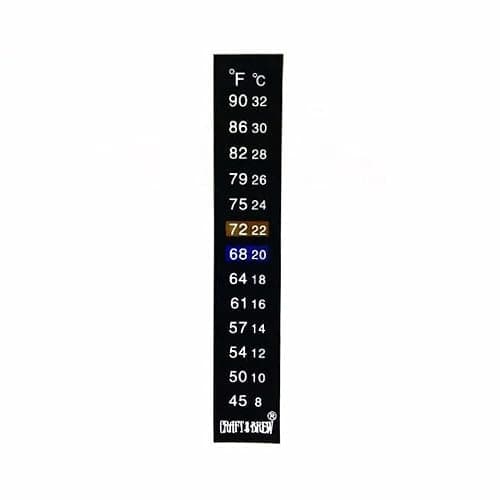
Whether the batch is running fast. A strip on the glass reads the kombucha, not the shelf
Move the jar, or add a thermostat to a heat mat
pH
How far along the batch is, independent of taste
Bottle earlier; a batch heading below 3 is heading past drinkable
Taste, from day five
The only measurement that reflects what you actually like
Bottle when it is right, not when the calendar says
An adhesive strip thermometer costs less than a cup of coffee and is the single highest- value purchase on this site for this specific problem, because it turns “the kitchen feels about the same” into a number that explains why this batch went four days faster than the last one.
The picks
Three things that stop it happening again
A strip that reads the liquid through the glass, strips that tell you where the batch is regardless of taste, and bottles to move it into the moment it is right.
Craft a Brew
Fermometer Adhesive Strip Thermometer
A four-inch liquid crystal strip that sticks to the glass and reads the liquid rather than the air, which is the distinction that matters.
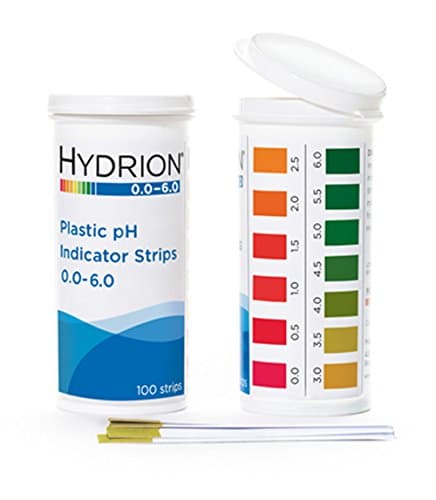
A 0.0 to 6.0 range in 0.5 steps, which puts four separate color matches inside the 2.5 to 3.5 window kombucha lives in — a 1-to-14 strip gives you one.
The single behavioral change that fixes this is tasting early and often. Draw a small amount from day five — a spigot makes this trivial, a straw or a clean spoon works otherwise — and taste it every day or two after that.
You are looking for the point where the sweetness has dropped away but the sharpness has not taken over. That point is personal, it moves with the seasons, and it is not on any calendar. The day-by-day timeline describes what each stage tastes like so you know what you are tasting for.
One caution when you sample: take from below the pellicle without disturbing it more than you have to, and do not reuse a spoon that has been in your mouth. The batch is well protected by its own acidity, but there is no reason to introduce anything.
Fixing the batch you already have
A vinegary batch cannot be un-fermented. What it can be is diluted, blended or repurposed, and all three are legitimate.
Cut it. Blending sour kombucha with juice, sparkling water or a sweeter batch produces something perfectly good to drink. Half and half with juice is where most people land.
Second-ferment it with fruit. Adding sugar in the form of fruit gives the yeast something to work with, produces carbonation, and the fruit's own sweetness offsets the sharpness. This is the standard rescue.
Keep it as starter. Strong, acidic kombucha is exactly what the next batch needs as starter tea, and a very sour batch is premium starter. Nothing is wasted.
Use it as vinegar. Dressings, deglazing, cleaning. Just do not use it anywhere the acid strength has to be known — canning in particular.
Preventing it next time
Three adjustments, in the order worth trying them.
Move the jar somewhere cooler and more stable before changing anything else. An interior shelf away from appliances and direct sun beats a windowsill, and stability matters as much as the absolute number — a jar that swings ten degrees a day is harder to predict than one that sits steadily at the top of the range.
Then measure your starter. Ten percent of batch volume is roughly 12 to 13 fluid ounces for a gallon. If you have been eyeballing it, measure it once and you may find that is the whole story.
Finally, shorten the schedule and accept it. If your kitchen runs warm, your batch is a seven-day batch, and continuing to run a fourteen-day habit because that is what the instructions said is how you get vinegar every time.
A sour first ferment makes a better second one
There is a genuine upside here that gets lost in the disappointment. A sharply sour base is the better starting point for a second fermentation, not the worse one, for two reasons.
The first is that the fruit or juice you add brings its own sweetness, and a base that is already sweet plus added sugar produces something cloying. A sour base gives the fruit room to show.
The second is carbonation. A very sour batch has an active, well-established yeast population that has run out of easy food, which is exactly the population you want when you hand it a spoonful of fruit sugar in a sealed bottle. Sour batches often carbonate faster and harder than gentle ones, which is worth knowing before you leave them out for five days out of habit.
So the practical move with a batch that overshot is not to pour it away and it is often not to dilute it either. It is to bottle it with fruit, check it a day earlier than usual, and treat the sourness as the starting condition rather than the problem.
There is also the option of not fixing it at all. If a batch has gone well past drinkable and you would rather commit than rescue, making kombucha vinegar on purpose turns the same jar into something worth keeping, with a few adjustments that beat letting it happen by accident.
One cause of an over-sour batch is not on the list above because it is not a mistake: you went away. Leaving your kombucha while you are away covers what to do before a trip, and how to read the jar on your return — where sour, vinegary and genuinely spoiled are three different findings with three different uses.
Heads up: some links on this page are affiliate links. If you buy through one we may earn a commission at no extra cost to you. It never changes a ranking, and we take no payment for placement. The full version.
The short answer
Quick picks
Ranked on the published rubric. Every row jumps to that product's full write-up below; the button goes straight to Amazon.
#
Product
Best for
Score
Price
1
Craft a Brew
Fermometer Adhesive Strip Thermometer
A four-inch liquid crystal strip that sticks to the glass and reads the liquid rather than the air, which is the distinction that matters.
A 0.0 to 6.0 range in 0.5 steps, which puts four separate color matches inside the 2.5 to 3.5 window kombucha lives in — a 1-to-14 strip gives you one.
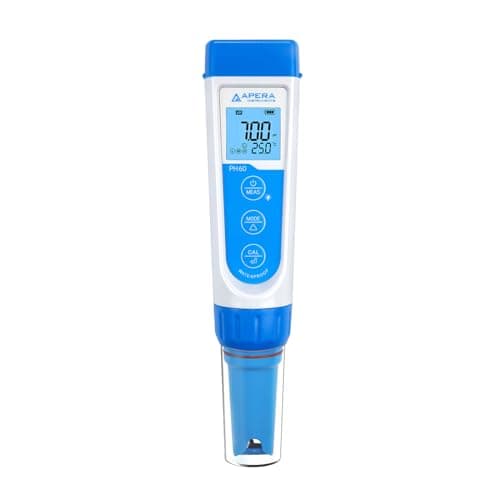
The only meter here whose published accuracy — ±0.01 pH — is finer than the decision you are using it to make, with a probe you can replace instead of the whole instrument.
Craft a Brew Fermometer Adhesive Strip Thermometer
A four-inch liquid crystal strip that sticks to the glass and reads the liquid rather than the air, which is the distinction that matters.
Who it is for. Every brewer. This is the cheapest way to stop guessing what temperature the batch is at.
Published specifications
Size
Approximately 0.75 x 4 in
Reads
Fahrenheit and Celsius
Application
External fermenter surface
Compatible surfaces
Glass, plastic and stainless steel fermenters
How it works
“changes color to display the current temperature of the fermenting liquid inside the vessel”
Temperature range
Not published by this maker. Comparable fermentation strips are sold in bands such as 46-82 F, 57-90 F and 46-93 F.
Accuracy
Not published
Sold as
A 5 pack on the Amazon listing; the maker's own store lists it as a single strip
Source: Craft a Brew published Fermometer specification (size, display units, compatible surfaces, operating principle), craftabrew.com/products/fermometer-adhesive-strip-thermometer, fetched 2026-09-01. Comparable-strip ranges from retailer listings, cited as comparisons only.
Rubric — 7.4 / 10
Materials7/10 · weight 28%
Documentation5/10 · weight 22%
Capacity fit8/10 · weight 16%
Cleaning8/10 · weight 18%
Value10/10 · weight 16%
What it gets right
It reads through the glass, so it tells you what the kombucha is at rather than what the shelf is at — those differ by several degrees on a sunny afternoon
It costs less than a cup of coffee and never needs a battery
It sticks to glass, plastic and stainless, so it moves with you if you change vessels
Always visible, which means you actually look at it
What it costs you
Neither range nor accuracy is published for this specific strip
Liquid crystal strips read in bands, so you get “about 76” rather than 76.2
The two listings disagree on whether it is reusable — the Amazon listing calls it reusable, the maker's own spec page says nothing about removing or reapplying it
Skip it if. You want a logged, numeric record. A strip is a glance, not a measurement you can write down with confidence.
A 0.0 to 6.0 range in 0.5 steps, which puts four separate color matches inside the 2.5 to 3.5 window kombucha lives in — a 1-to-14 strip gives you one.
Who it is for. Every kombucha brewer. This is the cheapest instrument on the site and the one that answers the safety question.
The only meter here whose published accuracy — ±0.01 pH — is finer than the decision you are using it to make, with a probe you can replace instead of the whole instrument.
Who it is for. Someone brewing continuously, tracking a number over time, or pushing a batch toward vinegar and wanting to know exactly where it is.
Published specifications
Model
PH60, SKU AI311
Range
“-2.00 to 16.00 pH”
Accuracy
“±0.01 pH ±1 digit”
Resolution
“0.01/0.1 pH”
Temperature compensation
“Auto Temperature Compensation 0 to 50°C (32 to 122°F)”
“TWO YEARS for the instrument and SIX MONTHS for the probe”
Source: Apera Instruments published PH60 product specification (model/SKU, range, accuracy, resolution, ATC range, calibration points and recognized buffers, replaceable PH60-E probe, IP67 rating, battery type and 2000-hour life, kit contents, warranty terms), aperainst.com, retrieved 2026-09-06
Rubric — 8.4 / 10
Materials9/10 · weight 28%
Documentation10/10 · weight 22%
Capacity fit9/10 · weight 16%
Cleaning7/10 · weight 18%
Value6/10 · weight 16%
What it gets right
±0.01 pH published accuracy against a decision line at 4.2 — the instrument is an order of magnitude finer than the question, which is the right way round
Three-point automatic calibration with buffers in the box, so it arrives ready to be made trustworthy rather than merely switched on
The probe is a replaceable part with its own model number, so a dead electrode is a component failure and not a landfill event
IP67 and floatable, which is a sensible specification for a device used over an open jar
What it costs you
The published probe warranty is six months against two years for the instrument, which tells you honestly where the wear is
It needs storage solution and periodic recalibration. A meter left dry in a drawer for a year reads confidently and wrongly
It costs many times a vial of strips to answer a question strips already answer well enough for most brewers
Four AAA batteries and a case make it a thing you own, not a thing you keep next to the jar
Skip it if. You test once a batch to confirm the ferment is under 4.2. Strips do that for a fraction of the money and never need calibrating.
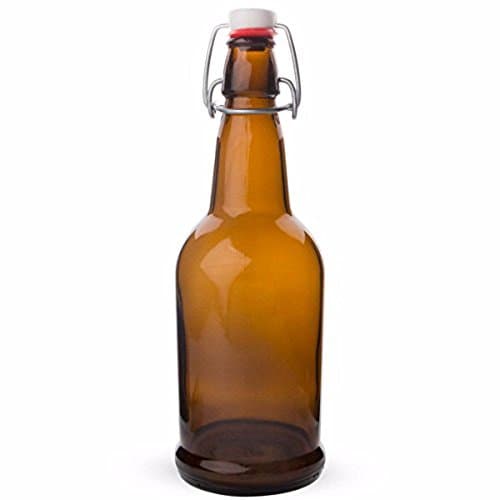
EZ Cap Swing Top Bottles, Amber Glass, 16 oz (Case of 12)
The only bottle here with a published pressure rating — 100 PSI — in amber glass, which is the combination a second ferment actually asks for.
Who it is for. Anyone doing a second ferment who wants a bottle with a number behind it rather than a shape that looks strong.
Published specifications
Capacity
16 oz
Glass color
Amber
Pressure rating
“Pressure rated to 100 PSI which means they can easily handle the carbonation of soda pop and hard seltzer”
Case quantity
12 bottles, includes 12 swing tops
Closure
Reusable swing top; also accepts a 26 mm pry-off crown cap
Maker’s note
“These swing tops are designed to be primarily sealed with a crown cap closure for long term storage.”
Dimensions
Not published
Source: MoreBeer published EZ Cap product specification (capacity, pressure rating, case contents, crown cap compatibility), morebeer.com/products/ez-cap-swing-top-bottles-amber-glass-16-oz-case-12, fetched 2026-09-01
Rubric — 8.3 / 10
Materials9/10 · weight 28%
Documentation9/10 · weight 22%
Capacity fit8/10 · weight 16%
Cleaning7/10 · weight 18%
Value8/10 · weight 16%
What it gets right
A published 100 PSI rating is the single most useful number in this whole category, and almost nobody publishes one
Amber glass blocks the light that degrades a bottle sitting out on a counter through a second ferment
The dual finish means you can crown-cap a batch you want to leave for months and swing-top the ones you will drink this week
16 oz is one serving, so a bottle gets opened once and drunk rather than losing its carbonation over three days
What it costs you
Swing-top gaskets perish, and a tired gasket is the commonest cause of a flat second ferment
No dimensions published, so fitting twelve of them on a fridge shelf is a measuring job when they arrive
Crown caps are sold separately if you want the long-storage option the maker recommends
Skip it if. You want to see the color of the finished drink. Amber hides it; the clear version of the same bottle does not.
Because it fermented past the point you wanted. The usual causes, in order, are a warmer room than you realized, a longer ferment than intended, too much starter tea at the beginning, or a strong established culture that simply works faster than it used to.
Is sour kombucha safe to drink?+
Yes. Sourness is increased acidity, and acidity is what protects the batch. An over-fermented kombucha is safer than an under-fermented one. The thing to check for is mold on the surface — dry and fuzzy in white, green, blue or black — which looks nothing like sourness tastes.
Can I fix kombucha that is too sour?+
You cannot un-ferment it, but you can cut it with juice or sparkling water, second-ferment it with fruit so the added sugar produces carbonation and offsets the sharpness, keep it as strong starter tea for the next batch, or use it as a vinegar for dressings and cleaning.
How do I stop kombucha over-fermenting?+
Move the jar somewhere cooler and more stable, measure starter tea at about ten percent of batch volume rather than estimating, and shorten your schedule to match your kitchen. Then taste from day five and bottle when it tastes right rather than on a fixed day.
How long should kombucha ferment before it goes too sour?+
Seven to fourteen days is the usual range, but the top of that range assumes a cool room. A warm kitchen can take a batch past drinkable in a week. There is no correct number of days — the right time is when it tastes the way you want, which is why tasting from day five matters more than the calendar.
Sources
Every specification cited on this page came from one of these documents, retrieved on the date shown against the product it belongs to.