For a trip of up to about two weeks, do nothing clever: bottle whatever is ready, leave the jar covered at room temperature, and accept that it will be more sour when you get home. For a month or more, convert the jar into a SCOBY hotel — let it finish, do not add fresh sweet tea, and leave it covered with cloth somewhere warm. The culture will be fine either way. The thing you are actually protecting is your next batch, and the way you protect it is by leaving behind plenty of strong, acidic liquid.
What you do not need to worry about
Almost everyone who asks this question is worried about the wrong thing. They are picturing something dying, or going bad, or becoming unsafe while nobody is watching.
A kombucha jar left alone gets more protected over time, not less. The culture keeps eating sugar and producing acid, the pH keeps falling, and a low-pH liquid is hostile to almost everything that might otherwise move in. Is home fermentation safe sets out the mechanism in full. The risk window in a kombucha batch is the first few days, when the tea is still sweet and not yet acidic — which is exactly the window you are not in if the jar has been running for a week before you leave.
So the realistic outcomes of leaving a jar are: it gets sour, it gets very sour, or it becomes vinegar. None of those is a failure. Two of them are useful.
What to do, by how long you are gone
The decision for each length of absence, and what you should expect on your return.
You are away
Do this before you go
What you come back to
Up to a week
Nothing. Leave the jar covered at room temperature.
A finished or slightly over-finished batch. Taste and bottle it.
One to two weeks
Bottle anything already at the taste you like. Leave the jar running.
A sour batch. Good for a second ferment with plenty of fruit, or for cooking.
Two to six weeks
Stop feeding it. Let the jar finish and leave it covered as a hotel.
Strong, vinegary liquid and a thick pellicle. Perfect starter tea.
Six weeks to several months
Same, but top the jar up so the pellicles stay well submerged.
Near-vinegar. Use it as starter tea, or keep it as vinegar on purpose.
A season or longer
As above. Refrigerating a hotel is the last resort, not the first.
A slow culture that wakes up over a batch or two.
The pattern worth noticing is that the advice converges. Past about two weeks, every answer is the same answer: stop treating the jar as a batch and start treating it as a hotel. The difference between a month and a year is not what you do before you leave — it is only how long the wake-up takes afterward.
The one thing that does get worse with time
Nothing on the list above is a spoilage risk. There is exactly one failure that genuinely accumulates over a long absence, and it is the least dramatic thing imaginable: evaporation.
A jar covered with cloth rather than a lid is, by design, open to the air. Over a warm summer month in a dry room, a meaningful amount of liquid leaves through that cloth. The level drops, and the pellicles that were floating end up sitting proud of the surface in dry air. A pellicle exposed to air dries, and a dried pellicle does not come back — which is the one way a long trip can actually cost you a culture.
The fix takes a minute on the way out of the door. Before a long absence, make sure the jar is full enough that the cultures stay well submerged even after the level falls — top it up with finished kombucha from the same batch, not with fresh sweet tea. That keeps the liquid acidic while adding the depth that buys you the months. Leave the usual headroom below the rim; you are filling the liquid, not the jar.
Two smaller precautions are worth the same minute. Check that the band holding the cloth is tight, because a cover that works loose over six weeks is an open invitation to fruit flies in a house nobody is walking through. And move the jar out of any spot that gets direct sun for part of the day — a jar that is fine in March can cook on a windowsill in July, and a long absence is exactly when the season changes underneath you.
The three things in your kitchen, and what each one needs
"My kombucha" is usually three separate things with three different needs, and conflating them is why this question feels harder than it is.
The active jar. Leave it covered with cloth, at room temperature, out of direct sun. Never seal it — the first fermentation is aerobic and a sealed jar is both wrong for the culture and a pressure problem. Covers, cloths and why not a lid covers the detail. Do not refrigerate the jar as a way of pausing it.
Bottles already in a second ferment. These are the only genuinely time-sensitive item you own, because they are sealed and they are building pressure. Put every sealed bottle in the fridge before you leave, whatever its stage. Cold slows the ferment to a crawl; a bottle left warm for three weeks is the one scenario on this page that can end in broken glass.
The culture itself. It needs to be wet, acidic and covered. That is the entire requirement. It does not need feeding on a schedule, it does not need light, and it does not need you.
The picks
What makes a trip survivable
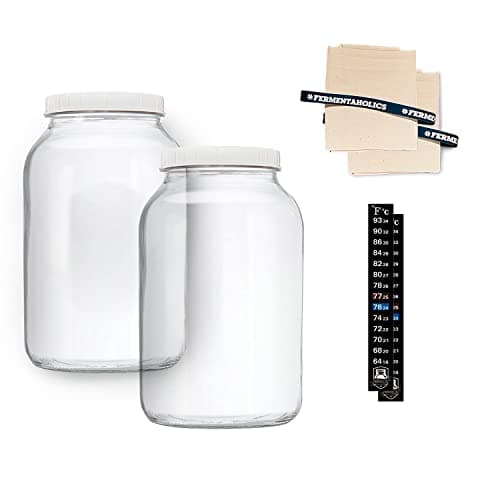
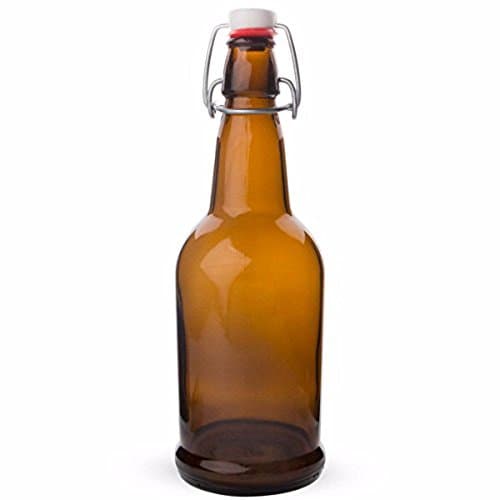
A second jar so the hotel is not also the jar you brew in, and bottles that hold pressure so anything finished can go cold before you leave rather than carry on fermenting on the counter.
Fermentaholics
One Gallon Plain Glass Kombucha Jars, 2-Pack
Two identical gallon jars, each with its own cover, band and temperature strip — which is how you stop having a week with no kombucha in it.
Do not put the brewing jar in the fridge. Cold does not pause a culture cleanly; it stops it producing the acid that protects it, and it takes several batches to come properly back up to speed. Room temperature and no feeding is a better hold than refrigeration for anything short of several months. The SCOBY hotel page makes the same call for the same reason.
Do not add a big dose of fresh sweet tea on the way out of the door. It is the instinct — feed it before a trip, the way you would overfill a pet's bowl — and it is backwards. Fresh sweet tea raises the pH and gives you an unattended jar sitting in the one window where things can go wrong. Leave it sour.
Do not start a new batch the day before you leave. A brand-new jar of sweet tea spends its first days above pH 4.2, and that is precisely the period you would rather be in the room for. If the timing is tight, bottle what you have and start the new batch when you are back.
What to do when you get home
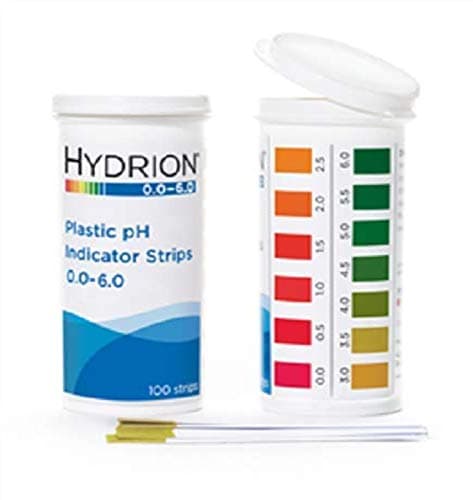
Pour a little out and taste it. Then run a pH strip on it, which is the measurement that turns guesswork into a decision. What you find puts you in one of three places.
Reading the jar on your return, and what each result is good for.
What you find
What it is
What to do with it
Sour but drinkable, pH around 2.8-3.2
An over-finished batch
Bottle it with a generous amount of fruit or juice; a sour first ferment makes an excellent second one.
Sharply vinegary, thin, pH near 2.5
Effectively kombucha vinegar
Keep a jar as starter tea and use the rest in the kitchen. It is not a wasted gallon.
A thick new pellicle covering the surface
Completely normal
Lift it off, keep the newest layer, compost the oldest.
Fuzzy, dry, raised spots on the surface
Mold
The batch and the culture both go. This is rare in an acidic jar.
A dry jar with exposed pellicles
Evaporation over months
Discard the dried layers; any submerged layer is likely still viable.
Only the fourth row is bad news, and it is the least likely of the five. Mold versus SCOBY has the distinction in detail — the short version is that everything a healthy culture does is wet and flat, and mold is fuzzy and dry and sits proud of the surface.
The restart after a long absence is a single decision: how much of that strong liquid do you keep. The answer is more than you think. Hold back a generous two cups minimum for a gallon — a little over the usual ten percent — because a culture that has been idle for months is slower off the mark, and a bigger starter pour compensates for that directly.
Expect the first batch back to take longer than usual, and expect the second to be normal. That is not the culture recovering from damage; it is a yeast and bacteria population rebuilding its numbers in fresh sugar.
The purchase that makes all of this easy is not exotic. It is a second gallon jar. With two jars you never have to choose between keeping a hotel and brewing a batch, you can leave for a month without converting your only vessel, and you have a backup culture if something does go wrong. The gallon jar comparison covers which, and what size jar you need covers the case for two jars rather than one big one.
And if you came home to a jar you genuinely cannot save — the fuzzy-and-dry case — a replacement culture is a small order rather than a disaster, and the whole point of keeping a hotel is that next time it will not be. Where to buy a SCOBY covers what to check before ordering.
Heads up: some links on this page are affiliate links. If you buy through one we may earn a commission at no extra cost to you. It never changes a ranking, and we take no payment for placement. The full version.
The short answer
Quick picks
Ranked on the published rubric. Every row jumps to that product's full write-up below; the button goes straight to Amazon.
#
Product
Best for
Score
Price
1
Fermentaholics
One Gallon Plain Glass Kombucha Jars, 2-Pack
Two identical gallon jars, each with its own cover, band and temperature strip — which is how you stop having a week with no kombucha in it.
EZ Cap Swing Top Bottles, Amber Glass, 16 oz (Case of 12)
The only bottle here with a published pressure rating — 100 PSI — in amber glass, which is the combination a second ferment actually asks for.
Who it is for. Anyone doing a second ferment who wants a bottle with a number behind it rather than a shape that looks strong.
Published specifications
Capacity
16 oz
Glass color
Amber
Pressure rating
“Pressure rated to 100 PSI which means they can easily handle the carbonation of soda pop and hard seltzer”
Case quantity
12 bottles, includes 12 swing tops
Closure
Reusable swing top; also accepts a 26 mm pry-off crown cap
Maker’s note
“These swing tops are designed to be primarily sealed with a crown cap closure for long term storage.”
Dimensions
Not published
Source: MoreBeer published EZ Cap product specification (capacity, pressure rating, case contents, crown cap compatibility), morebeer.com/products/ez-cap-swing-top-bottles-amber-glass-16-oz-case-12, fetched 2026-09-01
Rubric — 8.3 / 10
Materials9/10 · weight 28%
Documentation9/10 · weight 22%
Capacity fit8/10 · weight 16%
Cleaning7/10 · weight 18%
Value8/10 · weight 16%
What it gets right
A published 100 PSI rating is the single most useful number in this whole category, and almost nobody publishes one
Amber glass blocks the light that degrades a bottle sitting out on a counter through a second ferment
The dual finish means you can crown-cap a batch you want to leave for months and swing-top the ones you will drink this week
16 oz is one serving, so a bottle gets opened once and drunk rather than losing its carbonation over three days
What it costs you
Swing-top gaskets perish, and a tired gasket is the commonest cause of a flat second ferment
No dimensions published, so fitting twelve of them on a fridge shelf is a measuring job when they arrive
Crown caps are sold separately if you want the long-storage option the maker recommends
Skip it if. You want to see the color of the finished drink. Amber hides it; the clear version of the same bottle does not.
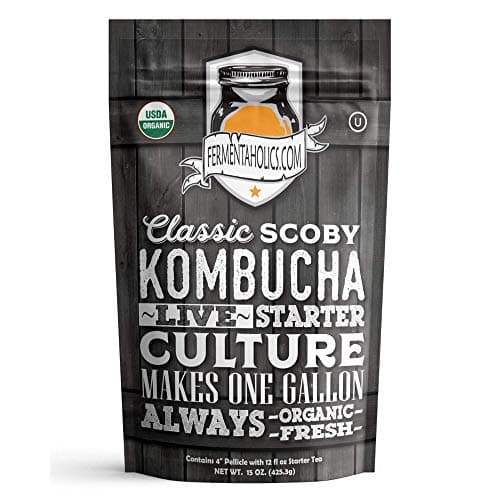
Fermentaholics Organic Kombucha SCOBY with 12 fl oz Starter Tea
A hand-selected pellicle with twelve fluid ounces of mature starter tea, measured against the maker’s own published ten percent rule for a gallon.
Who it is for. Anyone starting a standard one-gallon batch who wants the starter tea measured for them.
Published specifications
Batch size
One gallon
Starter tea volume
12 fl oz of mature, active starter tea
Pellicle
Hand-selected
Starter tea ingredients
Organic cane sugar, filtered water, organic black tea, live cultures
Certification
USDA Certified Organic, Kosher, Non-GMO, vegan
Production
Grown in the maker’s licensed lab
Maker’s dosing rule
“the rule of thumb is to use 10% starter tea per batch size”
Source: Fermentaholics published SCOBY specification (12 fl oz starter tea, 1-gallon dosing, ingredients, certifications) and its published 10 percent starter rule, retrieved 2026-09-01
Rubric — 8.5 / 10
Materials9/10 · weight 28%
Documentation9/10 · weight 22%
Capacity fit8/10 · weight 16%
Cleaning8/10 · weight 18%
Value8/10 · weight 16%
What it gets right
12 fl oz against a 128 oz gallon is 9.4 percent, within a rounding error of the maker’s own 10 percent rule — the quantity matches the instruction
Starter tea is the part that actually acidifies a new batch and protects it from mold; the pellicle is mostly a raft
Ingredients of the starter tea are published, which almost no culture seller does
Certified organic, kosher, non-GMO and vegan are stated together
What it costs you
A live culture in transit is a live culture in transit — heat and delay are real risks nobody controls
No stated shelf life once it arrives
You still need tea, sugar and a jar
Skip it if. You are brewing half a gallon. Buy the half-gallon version instead; a gallon’s worth of starter in a half-gallon batch drives the acidity too far, too fast.
What do I do with my kombucha when I go on vacation?+
For up to about two weeks, nothing: leave the jar covered with cloth at room temperature and accept a more sour batch when you return. For longer than that, let the jar finish without adding fresh sweet tea and leave it as a SCOBY hotel. Refrigerate any sealed second-ferment bottles before you go, because those are the only genuinely time-sensitive item.
How long can you leave kombucha unattended?+
Indefinitely, in the sense that it will not become unsafe — the liquid only becomes more acidic over time, and acid is what protects it. It will become steadily more sour and eventually vinegary. The practical limits are evaporation over several months, which can leave pellicles exposed and dry, and your own tolerance for how sour the result is.
Should I put my kombucha in the fridge before a trip?+
Bottles yes, the brewing jar no. Sealed bottles keep fermenting and building pressure on a warm counter, so cold storage is the right call for them. The brewing jar is better left at room temperature: cold stops the culture producing the acid that protects it and it takes several batches to recover properly afterward.
Will my SCOBY die if I leave it for a month?+
No. A culture left in its own acidic liquid under a cloth keeps for months. It slows right down and the liquid goes very sour, but feeding it brings it back over a batch or two. The real threats over a long absence are the jar drying out by evaporation and the pellicles being left exposed above the liquid line.
Can I just start a new batch before I leave?+
It is the one timing choice worth avoiding. A fresh jar of sweet tea spends its first days above pH 4.2, which is the only genuinely vulnerable window in the process, and that is the period you would rather be in the room for. Bottle what you have and start the new batch when you are home.
My kombucha tastes like vinegar after a trip. Is it ruined?+
No, it is finished and then some. Keep two generous cups as starter tea for the next batch — mature, strongly acidic liquid is the best starter you can get — and use the rest as kombucha vinegar in dressings and marinades, or bottle it with plenty of fruit for a second ferment that can carry the sourness.
Sources
Every specification cited on this page came from one of these documents, retrieved on the date shown against the product it belongs to.