Tepache is fermented pineapple: the rind and core of a pineapple, plus sugar and water, left covered at room temperature for two to four days. No culture to buy — the yeast is on the skin. It is the fastest and cheapest home ferment there is.
What it is
A traditional Mexican fermented drink, made from the part of the pineapple most people throw away. Wild yeasts on the rind ferment the sugars in the fruit and the added sugar, and in a couple of days you have a lightly fizzy, tart, distinctly pineapple drink.
It is closer to a ginger bug than to kombucha in how it works: wild organisms rather than a maintained culture, a short cycle, and no acid protection built up in advance. What it has that a ginger bug does not is that the result is the drink — you are not making a starter for something else.
The method
Wash a pineapple, cut the skin off in wide strips, and keep the core. The flesh is yours to eat.
Put the rind and core in a clean gallon jar with roughly half a cup of sugar — piloncillo traditionally, plain brown or white sugar in practice — dissolved in enough water to cover.
Cover with cloth and a band. Room temperature, out of direct sun.
Skim any white foam that forms on the surface, once or twice a day.
After two to four days it will be fizzy, tart and pineapple-forward. Strain it, and refrigerate.
Two to four days is the whole ferment, and the window is genuinely short. Leave it much longer at room temperature and it keeps going toward vinegar, then toward something alcoholic and unpleasant. Taste it daily from day two.
Tepache vs kombucha
Two drink ferments with very different demands.
Kombucha
Tepache
Culture
Bought, maintained indefinitely
Wild, on the pineapple skin
Cycle
7-14 days plus bottling
2-4 days
Ongoing commitment
A culture to keep alive between batches
None. Each batch is standalone.
Cost
Culture, tea, sugar
The part of a pineapple you were discarding
Flavor
Sour, tea-forward
Tart, sweet, unmistakably pineapple
Repeatability
High. Same culture every time.
Variable. Every pineapple is different.
The one-line summary: tepache is a project, kombucha is a practice. Tepache asks nothing of you between batches, which is exactly why it is the best way to find out whether you enjoy fermenting anything at all before committing to a culture you have to keep alive.
The picks
Everything tepache needs is a jar
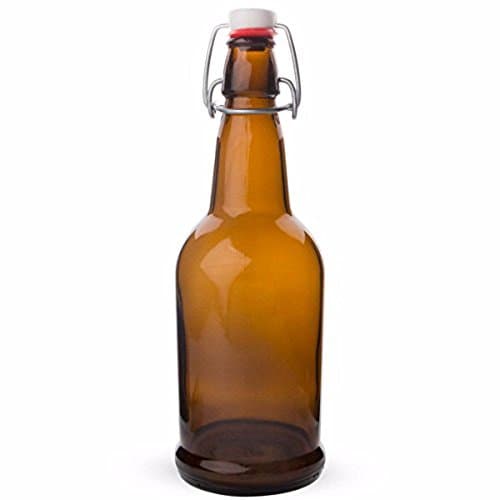
A gallon jar with a cloth cover, bottles if you want to carbonate it further, and a temperature strip — because a short ferment in a cold kitchen is a very slow ferment.
Score7.7no photo yet
Fermentaholics
Printed Gallon Kombucha Glass Jar
A gallon jar that arrives with the muslin cover, the band and a temperature strip already in the box, which is the whole non-culture half of a first batch.
Kombucha protects itself with acidity carried over from the previous batch. Tepache has no such head start: it begins as sweet water and relies on wild organisms establishing quickly. In practice they do, and tepache has been made this way for a very long time. But it deserves the ordinary short-ferment cautions.
Use a clean jar and clean hands. There is no acid margin to absorb carelessness.
Keep the rind submerged. Fruit sitting above the liquid is where mold starts.
Skim the white foam. It is normal, and skimming keeps the surface clear so you can see what is happening.
Fuzzy growth means the batch goes. Same rule as everywhere else on this site.
Taste from day two and refrigerate when it tastes right. Do not leave it running.
Straight from the jar, tepache is lightly fizzy. If you want it properly carbonated, strain it into pressure-rated bottles and leave them sealed for a day or two before refrigerating.
Be careful here. Tepache still has plenty of sugar in it and wild yeast is unpredictable, so bottled tepache can build pressure fast. Burp the bottles daily and get them into the fridge as soon as they are fizzy enough.
Heads up: some links on this page are affiliate links. If you buy through one we may earn a commission at no extra cost to you. It never changes a ranking, and we take no payment for placement. The full version.
The short answer
Quick picks
Ranked on the published rubric. Every row jumps to that product's full write-up below; the button goes straight to Amazon.
#
Product
Best for
Score
Price
1
Score7.7
Fermentaholics
Printed Gallon Kombucha Glass Jar
A gallon jar that arrives with the muslin cover, the band and a temperature strip already in the box, which is the whole non-culture half of a first batch.
A gallon jar that arrives with the muslin cover, the band and a temperature strip already in the box, which is the whole non-culture half of a first batch.
Who it is for. A first-time brewer, or anyone who has learned that the fewer parts a fermentation vessel has, the fewer places a batch can go wrong.
Published specifications
Capacity
1 gallon
Material
Glass
Included
Muslin cover, rubber band, temperature strip
Spigot
None
Dimensions
Not published
Mouth diameter
Not published
Source: Fermentaholics published jar listing contents, fermentaholics.com/product/printed-gallon-kombucha-glass-jar-2-pack/, retrieved 2026-09-01
Rubric — 7.7 / 10
Materials8/10 · weight 28%
Documentation5/10 · weight 22%
Capacity fit8/10 · weight 16%
Cleaning9/10 · weight 18%
Value9/10 · weight 16%
What it gets right
The temperature strip in the box means the jar tells you its own temperature from day one
Muslin breathes and blocks fruit flies, which is exactly what a kombucha cover has to do and what a solid lid does not
No spigot means no seal, no gasket and nothing to disassemble — the easiest vessel here to actually clean
The cheapest way into a proper gallon vessel
What it costs you
No published dimensions at all
No volume markers, so the starter reserve is eyeballed
No tap, so tasting means dipping and bottling means lifting
Skip it if. You want to draw a sample without opening the jar. A plain jar has to be opened every time you taste it.
#ad No live price feed yet, so no number is shown rather than a stale one. How this is funded.
#2 · Second ferment, one serving at a time
EZ Cap Swing Top Bottles, Amber Glass, 16 oz (Case of 12)
The only bottle here with a published pressure rating — 100 PSI — in amber glass, which is the combination a second ferment actually asks for.
Who it is for. Anyone doing a second ferment who wants a bottle with a number behind it rather than a shape that looks strong.
Published specifications
Capacity
16 oz
Glass color
Amber
Pressure rating
“Pressure rated to 100 PSI which means they can easily handle the carbonation of soda pop and hard seltzer”
Case quantity
12 bottles, includes 12 swing tops
Closure
Reusable swing top; also accepts a 26 mm pry-off crown cap
Maker’s note
“These swing tops are designed to be primarily sealed with a crown cap closure for long term storage.”
Dimensions
Not published
Source: MoreBeer published EZ Cap product specification (capacity, pressure rating, case contents, crown cap compatibility), morebeer.com/products/ez-cap-swing-top-bottles-amber-glass-16-oz-case-12, fetched 2026-09-01
Rubric — 8.3 / 10
Materials9/10 · weight 28%
Documentation9/10 · weight 22%
Capacity fit8/10 · weight 16%
Cleaning7/10 · weight 18%
Value8/10 · weight 16%
What it gets right
A published 100 PSI rating is the single most useful number in this whole category, and almost nobody publishes one
Amber glass blocks the light that degrades a bottle sitting out on a counter through a second ferment
The dual finish means you can crown-cap a batch you want to leave for months and swing-top the ones you will drink this week
16 oz is one serving, so a bottle gets opened once and drunk rather than losing its carbonation over three days
What it costs you
Swing-top gaskets perish, and a tired gasket is the commonest cause of a flat second ferment
No dimensions published, so fitting twelve of them on a fridge shelf is a measuring job when they arrive
Crown caps are sold separately if you want the long-storage option the maker recommends
Skip it if. You want to see the color of the finished drink. Amber hides it; the clear version of the same bottle does not.
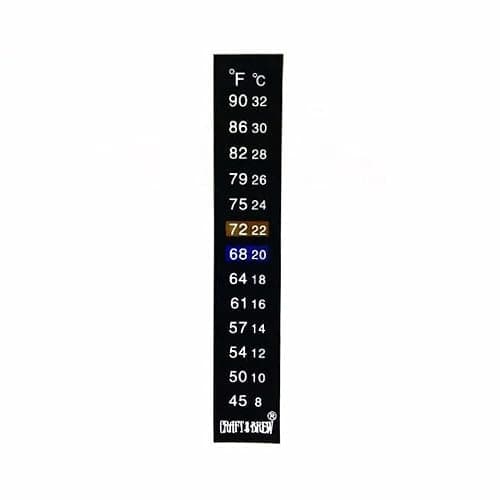
Craft a Brew Fermometer Adhesive Strip Thermometer
A four-inch liquid crystal strip that sticks to the glass and reads the liquid rather than the air, which is the distinction that matters.
Who it is for. Every brewer. This is the cheapest way to stop guessing what temperature the batch is at.
Published specifications
Size
Approximately 0.75 x 4 in
Reads
Fahrenheit and Celsius
Application
External fermenter surface
Compatible surfaces
Glass, plastic and stainless steel fermenters
How it works
“changes color to display the current temperature of the fermenting liquid inside the vessel”
Temperature range
Not published by this maker. Comparable fermentation strips are sold in bands such as 46-82 F, 57-90 F and 46-93 F.
Accuracy
Not published
Sold as
A 5 pack on the Amazon listing; the maker's own store lists it as a single strip
Source: Craft a Brew published Fermometer specification (size, display units, compatible surfaces, operating principle), craftabrew.com/products/fermometer-adhesive-strip-thermometer, fetched 2026-09-01. Comparable-strip ranges from retailer listings, cited as comparisons only.
Rubric — 7.4 / 10
Materials7/10 · weight 28%
Documentation5/10 · weight 22%
Capacity fit8/10 · weight 16%
Cleaning8/10 · weight 18%
Value10/10 · weight 16%
What it gets right
It reads through the glass, so it tells you what the kombucha is at rather than what the shelf is at — those differ by several degrees on a sunny afternoon
It costs less than a cup of coffee and never needs a battery
It sticks to glass, plastic and stainless, so it moves with you if you change vessels
Always visible, which means you actually look at it
What it costs you
Neither range nor accuracy is published for this specific strip
Liquid crystal strips read in bands, so you get “about 76” rather than 76.2
The two listings disagree on whether it is reusable — the Amazon listing calls it reusable, the maker's own spec page says nothing about removing or reapplying it
Skip it if. You want a logged, numeric record. A strip is a glance, not a measurement you can write down with confidence.
A traditional Mexican fermented drink made from pineapple rind and core with sugar and water, fermented for two to four days at room temperature. The yeast comes from the pineapple skin, so there is no culture to buy.
How long does tepache take?+
Two to four days at room temperature. The window is short: taste daily from day two, because it keeps fermenting past the point you want it and heads toward vinegar and then toward something unpleasantly alcoholic.
Do I need a culture to make tepache?+
No. The wild yeasts on the pineapple skin do the work, which is why the rind is the ingredient rather than the flesh. That also makes each batch variable — every pineapple carries a slightly different population.
Is tepache alcoholic?+
It contains some alcohol, as every fermentation does, and more the longer it runs. A short two-to-three-day ferment kept cold afterwards stays low; a batch left at room temperature for a week does not. It is not tested, so the exact level is unknown.
How is tepache different from kombucha?+
Tepache uses wild yeast from pineapple skin over two to four days and requires nothing between batches. Kombucha uses a maintained culture over one to two weeks and asks you to keep that culture alive indefinitely. Tepache is a project; kombucha is a practice.
Sources
Every specification cited on this page came from one of these documents, retrieved on the date shown against the product it belongs to.