Water kefir is the fastest carbonating drink on this site. That is the appeal, and it is also why the bottle you choose matters more here than it does for kombucha.
Strain the grains out first, add a splash of juice or a little fruit, seal it in a bottle with a published pressure rating, and check it in 24 to 48 hours rather than in three to five days. Water kefir has more available sugar and a faster yeast than kombucha, so the same bottle and the same patience produce a much livelier result — and, left alone over a warm weekend, a genuinely dangerous one.
What the second ferment actually does
The first ferment happens in an open jar with a cloth over it. Gas escapes as fast as the culture makes it, which is why a finished first ferment tastes mildly sweet and flat. The second ferment is the same organisms in a sealed bottle: the gas has nowhere to go, so it dissolves into the liquid and the drink turns fizzy.
That is the same mechanism as a kombucha second ferment, and the difference is speed. Kombucha ferments a sugared tea that its bacteria have already worked over for a week or two. Water kefir ferments plain sugar water in 24 to 48 hours, and the grains come out while there is still sugar in the liquid. You are sealing a more energetic yeast into a bottle with more to eat.
Practically, that means the timings you have read for kombucha are wrong here. A kombucha bottle that needs three days on the counter has a water kefir equivalent that may be done in one.
What decides the outcome
Four things, in the order they matter. Everything else is flavor preference.
A bottle with a published pressure rating. This is the whole safety argument, and almost no bottle maker publishes one. Swing-top bottles compared works through who states a figure and who does not. Nothing on a shelf labeled "decorative" belongs in this job.
Getting the grains out first. Water kefir grains do not belong in the second ferment. They keep working, they are awkward to fish out of a narrow bottle, and fruit acids and sugars in a sealed vessel are hard on them.
How much sugar you add. Carbonation tracks added sugar almost exactly. Juice brings a lot, fresh fruit brings a moderate amount, dried herbs and spices bring almost none.
Room temperature. The same bottle at 78 F and at 65 F is a completely different timeline. Warm rooms are why people come back to a shelf of over-pressurized bottles.
The bottles
There is one number worth having and hardly anyone publishes it.
Published closure and pressure information for the bottles this site has sourced. A blank means the maker publishes nothing on the subject.
Bottle
Closure
Pressure rating
Glass
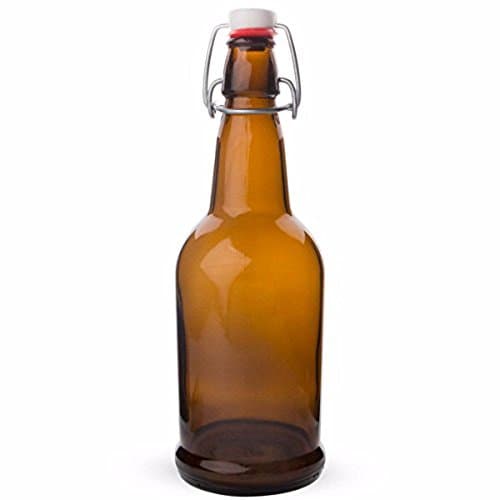
EZ Cap 16 oz amber
Swing top, also takes a 26 mm crown
100 PSI, published
Amber
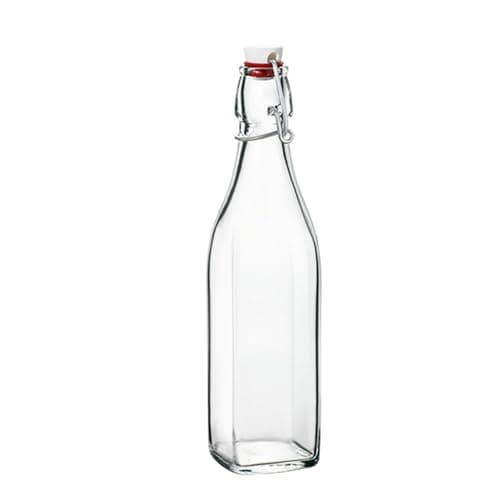
Bormioli Rocco Swing 1 L
Hermetic swing top
Not published
Clear
A repurposed soda bottle
Screw cap
Not published, but it goes hard when pressurized
PET plastic
The EZ Cap figure is the only published rating on this site and it is the reason that bottle keeps appearing on these pages. A 16 oz bottle is also the right unit for water kefir: it is a single serving, it is quick to chill, and if one bottle does go too far you have lost 16 ounces rather than a liter.
The plastic bottle in that table is not a recommendation to bottle in plastic. It is the oldest trick in home carbonation: fill one ordinary soda bottle alongside the glass ones, and squeeze it daily. When it stops giving and feels rock hard, the glass bottles next to it are at the same pressure. It costs nothing and it tells you something no glass bottle can.
The picks
What the second ferment needs
A bottle that publishes what it can take, a larger swing top if you would rather bottle in liters, and the grains themselves if you are still sourcing them.
EZ Cap
Swing Top Bottles, Amber Glass, 16 oz (Case of 12)
The only bottle here with a published pressure rating — 100 PSI — in amber glass, which is the combination a second ferment actually asks for.
Italian soda-lime glass with a published height and diameter and a hermetic clamp seal — the bottle that looks like a bottle, with the dimensions to check it fits a fridge door.
Two teaspoons of dehydrated grains that rehydrate to three or four tablespoons and then turn out two to three quarts every 24 to 48 hours, indefinitely.
Flavoring a water kefir bottle is the same arithmetic as flavoring kombucha, with the dial turned down because the drink is already carrying more sugar into the bottle.
Working proportions per 16 oz bottle, used consistently across this site. These are starting points, not published standards.
Addition
Per 16 oz bottle
Carbonation
Notes
Fruit juice
1-2 tbsp
Strong and fast
Easiest to measure and to strain out later
Fresh or frozen fruit
A small handful
Strong
Strain at pouring or accept the pulp
Dried fruit
One or two pieces
Strong
Very concentrated sugar. Go light
Fresh ginger
A thin slice or two
Moderate
Assertive flavor from very little
Herbs and spices alone
A sprig, a pod
Weak
Almost no sugar. Pair with juice if you want fizz
Notice that nothing in that table is a published figure. No maker publishes flavoring ratios for water kefir, because the variables are your grains, your room and your sugar. Start at the low end, write down what you did, and adjust on the next batch. The one rule that is not a preference: leave headspace. A bottle filled to the stopper has nowhere to put the gas.
Choosing what goes in the bottle
Water kefir is not kombucha and the flavoring logic is different. Kombucha arrives at the bottle already tasting of tea and acid, so additions have to compete with a strong base. Water kefir arrives tasting faintly of sugar water and whatever minerals it drew on, which means whatever you add is most of the flavor.
That cuts both ways. Delicate additions that vanish in kombucha — a slice of lemon, a few crushed raspberries, a single cardamom pod — come through clearly here. Strong ones take over completely, and a bottle flavored with the same quantity of ginger you would use in kombucha will taste of ginger and nothing else.
Fruit juice is the reliable default. It brings sugar for carbonation and flavor in the same spoonful, and it strains out easily because there is nothing to strain.
Whole fruit gives a cleaner taste and more work. It carbonates a little slower than juice and leaves pulp you will want to pour through a sieve.
Dried fruit is concentrated. One or two pieces is genuinely enough. This is the commonest way people overshoot both the sweetness and the pressure.
Citrus peel, herbs and spices bring almost no sugar. Lovely flavor, very little fizz. Pair them with a splash of juice if you want both.
One ingredient to treat carefully: anything oily. Citrus oils and some herbs carry compounds that suppress foam and can leave a film on the glass, which is a nuisance to wash out of a narrow bottle. That is a preference point rather than a safety one.
Timing, and why it is shorter than you think
The published cycle for the first ferment is 24 to 48 hours — that figure comes from Cultures for Health and is the same one used on the water kefir grains page. The second ferment runs on a similar clock.
In a warm kitchen, a bottle with juice in it can be properly fizzy in 24 hours. In a cool one it may take two or three days. There is no calendar answer, which is exactly why the plastic tester bottle earns its place: it converts "has it been long enough" into something you can feel with one hand.
When it is where you want it, refrigerate. Cold does not stop the culture but it slows it to the point where the drink stops changing much, and the gas stays in solution instead of escaping the moment you open it.
Straining, and what to do with the grains
Water kefir grains come out before bottling and go straight into their next batch of sugar water. They do not need washing, and rinsing them in chlorinated tap water is one of the few genuinely harmful things you can do to them.
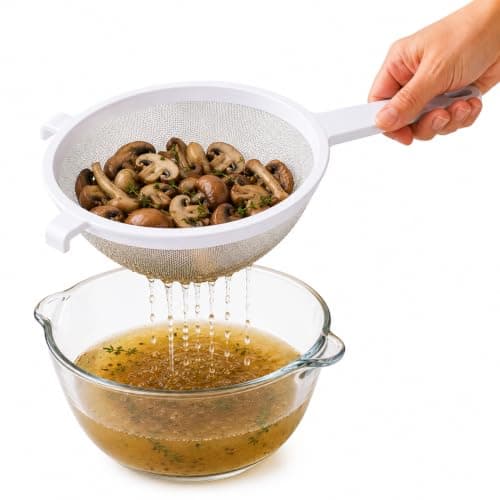
A fine mesh sieve is the tool, and it matters that grains are small and slippery. Strainers for kombucha and kefir covers mesh counts and which materials belong near an acidic ferment. If you are flavoring with whole fruit, you will want to strain again at pouring, which is an argument for juice rather than fruit if you dislike pulp.
Milk kefir is not the same job
Milk kefir also has a second ferment, and it works differently enough to be worth a sentence. It is usually done at room temperature in a sealed jar rather than a pressure bottle, it is about flavor and texture rather than fizz, and it is measured in hours. The bottle-pressure argument on this page does not apply to it in the same way, because nobody is trying to carbonate milk.
If you are choosing between the two ferments in the first place, kombucha vs water kefir compares what each one asks of you week to week.
What goes wrong
Bottles left over a warm weekend. The single commonest failure. Water kefir does not pause because you are busy. Refrigerate on schedule.
Grains left in the bottle. They keep fermenting, they are hard to retrieve, and the drink ends up drier and more alcoholic than intended.
No headspace. A bottle filled to the brim has nowhere to put the gas and will vent the moment it is opened.
Decorative bottles. A bottle sold for oil, syrup or table water is not built for pressure and its maker never claimed it was.
Flat results in a cold kitchen. Not a fault. Give it another day, or add a little more juice next time.
Heads up: some links on this page are affiliate links. If you buy through one we may earn a commission at no extra cost to you. It never changes a ranking, and we take no payment for placement. The full version.
The short answer
Quick picks
Ranked on the published rubric. Every row jumps to that product's full write-up below; the button goes straight to Amazon.
#
Product
Best for
Score
Price
1
EZ Cap
Swing Top Bottles, Amber Glass, 16 oz (Case of 12)
The only bottle here with a published pressure rating — 100 PSI — in amber glass, which is the combination a second ferment actually asks for.
Italian soda-lime glass with a published height and diameter and a hermetic clamp seal — the bottle that looks like a bottle, with the dimensions to check it fits a fridge door.
Two teaspoons of dehydrated grains that rehydrate to three or four tablespoons and then turn out two to three quarts every 24 to 48 hours, indefinitely.
The only strainer here whose maker states in writing that it is non-reactive and safe for acidic foods, which is the entire question a fermenter is asking.
EZ Cap Swing Top Bottles, Amber Glass, 16 oz (Case of 12)
The only bottle here with a published pressure rating — 100 PSI — in amber glass, which is the combination a second ferment actually asks for.
Who it is for. Anyone doing a second ferment who wants a bottle with a number behind it rather than a shape that looks strong.
Published specifications
Capacity
16 oz
Glass color
Amber
Pressure rating
“Pressure rated to 100 PSI which means they can easily handle the carbonation of soda pop and hard seltzer”
Case quantity
12 bottles, includes 12 swing tops
Closure
Reusable swing top; also accepts a 26 mm pry-off crown cap
Maker’s note
“These swing tops are designed to be primarily sealed with a crown cap closure for long term storage.”
Dimensions
Not published
Source: MoreBeer published EZ Cap product specification (capacity, pressure rating, case contents, crown cap compatibility), morebeer.com/products/ez-cap-swing-top-bottles-amber-glass-16-oz-case-12, fetched 2026-09-01
Rubric — 8.3 / 10
Materials9/10 · weight 28%
Documentation9/10 · weight 22%
Capacity fit8/10 · weight 16%
Cleaning7/10 · weight 18%
Value8/10 · weight 16%
What it gets right
A published 100 PSI rating is the single most useful number in this whole category, and almost nobody publishes one
Amber glass blocks the light that degrades a bottle sitting out on a counter through a second ferment
The dual finish means you can crown-cap a batch you want to leave for months and swing-top the ones you will drink this week
16 oz is one serving, so a bottle gets opened once and drunk rather than losing its carbonation over three days
What it costs you
Swing-top gaskets perish, and a tired gasket is the commonest cause of a flat second ferment
No dimensions published, so fitting twelve of them on a fridge shelf is a measuring job when they arrive
Crown caps are sold separately if you want the long-storage option the maker recommends
Skip it if. You want to see the color of the finished drink. Amber hides it; the clear version of the same bottle does not.
Italian soda-lime glass with a published height and diameter and a hermetic clamp seal — the bottle that looks like a bottle, with the dimensions to check it fits a fridge door.
Who it is for. Someone bottling a lightly carbonated kombucha for the table, or storing finished kombucha in the fridge rather than conditioning it on a counter.
Published specifications
Capacity
33.75 oz (1 liter)
Height
12.13 inches
Diameter
3.5 inches
Glass
BPA-free and lead-free soda-lime glass
Origin
Glass and components made in Italy
Closure
Hermetic swing top: metal clasp, stopper and gasket
Care
Dishwasher safe without the swing top. Hand wash the metal clamp, stopper and gasket.
Pressure rating
Not published
Source: Bormioli Rocco published Swing bottle specification (capacity, 12.13 in height, 3.5 in diameter, soda-lime glass, hermetic seal, care instructions), retailer specification listings retrieved 2026-09-01
Rubric — 8.0 / 10
Materials8/10 · weight 28%
Documentation8/10 · weight 22%
Capacity fit8/10 · weight 16%
Cleaning8/10 · weight 18%
Value8/10 · weight 16%
What it gets right
Height and diameter both published, so you can check a fridge shelf before ordering
Lead-free soda-lime glass is stated, which matters for a container holding a pH-3 liquid for weeks
The bottle body is dishwasher safe, and only the small parts need hand washing
Genuinely presentable — this is the bottle to hand someone
What it costs you
No published pressure rating, which is the one number a second ferment cares about most
Clear glass, so light gets to the drink
A liter is a lot to open at once
Skip it if. You are chasing hard carbonation. Without a stated pressure rating, a bottle you are deliberately building pressure inside is a bottle you are guessing about — use the rated EZ Cap instead.
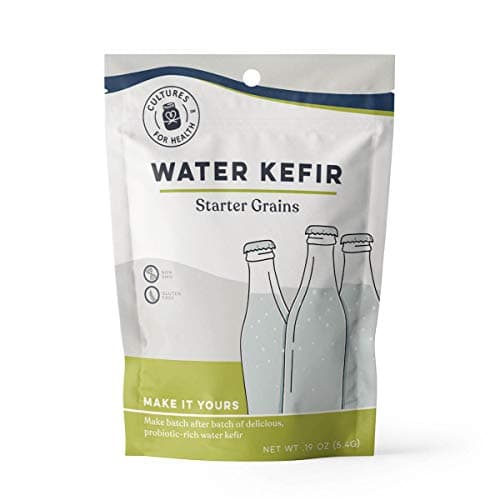
Cultures for Health Water Kefir Grains (Dehydrated)
Two teaspoons of dehydrated grains that rehydrate to three or four tablespoons and then turn out two to three quarts every 24 to 48 hours, indefinitely.
Who it is for. Someone who wants a fizzy home ferment on a two-day cycle, with no tea and no caffeine.
Published specifications
Shipped form
Dehydrated. Each packet contains 2 teaspoons of live active grains
Rehydration time
3-4 days; may take up to 7 days
Rehydration water
Unchlorinated, unfluoridated water with cane sugar
Activation sugar
1/4 cup cane sugar to 3-4 cups water
Rehydrated volume
3-4 tablespoons of grains
Output
2-3 quarts every 24-48 hours once established
Working ratio
1-2 teaspoons of grains per 4 cups of liquid
Culture temperature
68-85 F
Shelf life, room temperature
12-18 months at 68-78 F
Shelf life, refrigerated
18+ months at 40-45 F
Source: Cultures for Health published water kefir grain specifications (packet volume, rehydration, ratios, storage temperatures and shelf life), culturesforhealth.com water kefir FAQ and starter culture instructions, retrieved 2026-09-01
Rubric — 8.9 / 10
Materials9/10 · weight 28%
Documentation10/10 · weight 22%
Capacity fit8/10 · weight 16%
Cleaning8/10 · weight 18%
Value9/10 · weight 16%
What it gets right
A 24-to-48-hour cycle against kombucha’s 7 to 14 days — this is the ferment for someone impatient
Dehydrated grains have a published 12-to-18-month room-temperature shelf life, so the packet can sit in a drawer until you are ready
Every number a beginner needs is published: activation ratio, working ratio, temperature band, output volume
No tea and no caffeine, so it suits households that will not drink kombucha
What it costs you
Three to seven days of rehydration before the first real batch, which is longer than a kombucha SCOBY takes to get going
Chlorinated tap water will stall or kill the grains, so filtered water is not optional
Grains multiply, and you will be giving them away or throwing them out within a month
Skip it if. You want the sour, tea-driven flavor of kombucha. Water kefir is lighter, sweeter and closer to a soda; it is a different drink, not a faster kombucha.
#4 · Straining a ferment without metal in the acid
HIC Kitchen Double-Ear Fine Mesh Strainer, 7 in
The only strainer here whose maker states in writing that it is non-reactive and safe for acidic foods, which is the entire question a fermenter is asking.
Who it is for. Anyone straining a finished ferment on bottling day who wants the acid-contact question answered by the maker rather than by a forum.
Published specifications
Diameter
7 in
Material
BPA free plastic
Published acid claim
“durable, lightweight, non reactive, and safe for acidic foods”
Overall dimensions
13.25 x 7 x 3.25 in
Rim
Double-ear design that “rests securely across pots, pans, and bowls”
Dishwasher
“top-rack dishwasher safe”
Storage
Hangs for compact storage
Mesh aperture
Not published
Smaller size
The same strainer is listed at 5.5 in
Source: HIC Kitchen published Double-Ear Fine Mesh Strainer listing (7 in, BPA free plastic, “non reactive, and safe for acidic foods”, 13.25 x 7 x 3.25 in, double-ear rim, top-rack dishwasher safe, hangs for storage), Amazon B0042X9XAY, retrieved 2026-09-13
Rubric — 8.4 / 10
Materials8/10 · weight 28%
Documentation9/10 · weight 22%
Capacity fit8/10 · weight 16%
Cleaning9/10 · weight 18%
Value8/10 · weight 16%
What it gets right
A published “safe for acidic foods” claim is exactly the sentence this site spends a whole page on elsewhere, and almost no strainer maker writes it down
Plastic sidesteps the metal question entirely — no grade to verify, no alloy claim to trust, nothing to pit
The double-ear rim sits across a jug or bowl so both hands are free, which matters when you are pouring a full gallon
Top-rack dishwasher safe, which a fine mesh badly needs after sugary, yeasty liquid
What it costs you
The mesh aperture is not published, so how fine a strain you get is unknown until it arrives
Seven inches is generous for a gallon pour and far too wide to sit in a quart jar for daily kefir straining
Plastic mesh is more easily deformed than steel; a bent rim never quite sits flat again
No stated maximum temperature, and top-rack dishwasher safe is the only heat guidance given
Skip it if. You strain kefir grains daily out of a quart jar. This is the wrong size and shape for that; a small non-metal sieve set is the tool.
How long should a water kefir second ferment take?+
Usually 24 to 48 hours in a warm kitchen, sometimes two to three days in a cool one. That is markedly shorter than a kombucha second ferment because water kefir goes into the bottle with more available sugar and a faster yeast. There is no calendar answer, which is why a plastic tester bottle squeezed daily is more useful than a timer.
Do you leave the grains in for the second ferment?+
No. Strain them out and put them straight into their next batch of sugar water. Grains left in a sealed bottle keep fermenting, push the drink drier and more alcoholic than you intended, and are awkward to get back out of a narrow neck. Fruit acids and sugars in a sealed vessel are also hard on them.
What bottles are safe for water kefir?+
Bottles built to hold pressure, ideally one that publishes a rating. The EZ Cap 16 oz amber swing top publishes 100 PSI, which is the only such figure on this site. Hermetic swing tops like the Bormioli Rocco work in practice but publish nothing. Bottles sold for oil, syrup or table water are not pressure vessels regardless of how heavy the glass looks.
How much juice do you add to a water kefir second ferment?+
Roughly one to two tablespoons per 16 oz bottle is a sensible starting point, with fruit, ginger or herbs as alternatives that bring progressively less sugar and therefore less fizz. No maker publishes flavoring ratios for water kefir, so treat any number as a starting point and write down what you did.
Why is my water kefir not fizzy?+
Usually not enough added sugar, a cool room, or a bottle that does not seal. Juice carbonates hardest because it brings the most sugar; herbs alone bring almost none. Check the gasket on a swing top, leave headspace, and give it another day before deciding. A tired gasket is the commonest hardware cause of a flat bottle.
Can water kefir bottles explode?+
Yes, and it is more likely than with kombucha because the drink carbonates faster. The precautions are simple: a bottle that publishes a pressure rating, headspace left in the neck, a plastic tester bottle to gauge pressure, refrigeration once it is fizzy, and opening a chilled bottle over a sink rather than a warm one over a table.
Sources
Every specification cited on this page came from one of these documents, retrieved on the date shown against the product it belongs to.