Every number a beginner needs is published for this culture, which is rare. Here they are, in the order you meet them.
By Scooter M.·Published September 1, 2026 · Updated September 21, 2026
The short answer
Rehydrate dehydrated grains for three to four days, sometimes up to seven, in unchlorinated water with a quarter cup of cane sugar to three or four cups of water. Once established, use one to two teaspoons of grains per four cups of liquid and expect two to three quarts every 24 to 48 hours.
The published numbers
Cultures for Health's published specifications for its dehydrated water kefir grains.
Stage
Figure
Packet contents
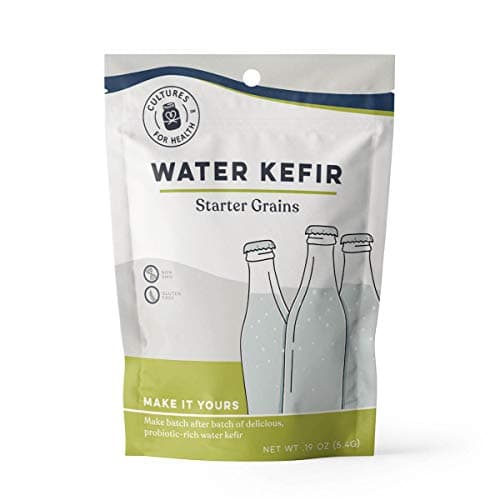
2 teaspoons of dehydrated live active grains
Rehydration time
3-4 days, may take up to 7
Rehydration water
Unchlorinated, unfluoridated
Activation ratio
1/4 cup cane sugar to 3-4 cups water
Rehydrated volume
3-4 tablespoons of grains
Working ratio
1-2 tsp grains per 4 cups liquid
Established output
2-3 quarts every 24-48 hours
Culture temperature
68-85 F
Shelf life, room temp
12-18 months at 68-78 F
Shelf life, refrigerated
18+ months at 40-45 F
It is worth pausing on how unusual that table is. Almost nothing else in home fermentation publishes its activation ratio, its working ratio, its temperature band and two shelf lives. That is a large part of why this culture is a good first ferment.
The water is not optional
Chlorine and chloramine are added to municipal water specifically to suppress microbial life, and water kefir grains are microbial life. Cultures for Health specifies unchlorinated, unfluoridated water for rehydration, and the same applies to every batch afterwards.
Filtered water works. So does tap water left standing uncovered overnight, which allows free chlorine to dissipate — though that does not remove chloramine, which many utilities now use instead. If your grains are sluggish and everything else looks right, the water is the first thing to change.
Rehydrating, step by step
Dissolve a quarter cup of cane sugar in three to four cups of unchlorinated water and let it come to room temperature. Add the grains, cover, and leave at 68 to 85 F. Change the sugar water every 24 hours. Over three to four days — up to seven — the grains plump up, become translucent and start producing bubbles.
The first batch or two of liquid from rehydrating grains is not worth drinking. Once they have swelled to three or four tablespoons and are visibly active, they are ready for a real batch.
The picks
Grains, and somewhere to put the result
Two dehydrated grain products with published methods, and pressure-rated bottles — water kefir carbonates hard and fast in a second ferment.
Cultures for Health
Water Kefir Grains (Dehydrated)
Two teaspoons of dehydrated grains that rehydrate to three or four tablespoons and then turn out two to three quarts every 24 to 48 hours, indefinitely.
Once established, the routine is simple: one to two teaspoons of grains per four cups of sugar water, strained out after 24 to 48 hours, and straight into the next batch. The finished liquid goes in the fridge or into bottles for a second ferment.
The commonest complaint about this culture, and it usually has one of four causes.
The water. Chlorine or chloramine, every time it is on the list. Try a batch with bottled or filtered water and see whether behavior changes.
Not enough minerals. Grains draw on trace minerals, and heavily filtered or distilled water has none. Plain white sugar has none either. A small piece of unsulfured dried fruit, or switching part of the sugar to an unrefined one, is the usual home remedy.
Too cold. The published band is 68 to 85 F. Below it, activity drops sharply and multiplication stops well before fermentation does.
Too many grains for the liquid. Overcrowding means they exhaust the sugar too quickly. The published ratio is one to two teaspoons per four cups — if you have far more grains than that, split them out.
The water rule above is the strictest on this site, and it is worth knowing why the usual workarounds only half work. Standing water overnight releases free chlorine but leaves chloramine behind, and an ordinary carbon filter at tap flow does much the same — tap water for kombucha and kefir covers how to tell which one your supply uses and what actually removes each.
Every published figure on this page comes from one maker, which is worth examining on its own terms. Our review of what Cultures for Health publishes sets their three starters side by side on documentation — and is specific about where that documentation runs out.
Bottling is the stage after this one, and water kefir carbonates harder and faster than kombucha does. The water kefir second ferment covers the bottles that hold it, how much juice to add and the timing that keeps a bottle from becoming a problem.
Heads up: some links on this page are affiliate links. If you buy through one we may earn a commission at no extra cost to you. It never changes a ranking, and we take no payment for placement. The full version.
The short answer
Quick picks
Ranked on the published rubric. Every row jumps to that product's full write-up below; the button goes straight to Amazon.
#
Product
Best for
Score
Price
1
Cultures for Health
Water Kefir Grains (Dehydrated)
Two teaspoons of dehydrated grains that rehydrate to three or four tablespoons and then turn out two to three quarts every 24 to 48 hours, indefinitely.
A gallon jar that arrives with the muslin cover, the band and a temperature strip already in the box, which is the whole non-culture half of a first batch.
Cultures for Health Water Kefir Grains (Dehydrated)
Two teaspoons of dehydrated grains that rehydrate to three or four tablespoons and then turn out two to three quarts every 24 to 48 hours, indefinitely.
Who it is for. Someone who wants a fizzy home ferment on a two-day cycle, with no tea and no caffeine.
Published specifications
Shipped form
Dehydrated. Each packet contains 2 teaspoons of live active grains
Rehydration time
3-4 days; may take up to 7 days
Rehydration water
Unchlorinated, unfluoridated water with cane sugar
Activation sugar
1/4 cup cane sugar to 3-4 cups water
Rehydrated volume
3-4 tablespoons of grains
Output
2-3 quarts every 24-48 hours once established
Working ratio
1-2 teaspoons of grains per 4 cups of liquid
Culture temperature
68-85 F
Shelf life, room temperature
12-18 months at 68-78 F
Shelf life, refrigerated
18+ months at 40-45 F
Source: Cultures for Health published water kefir grain specifications (packet volume, rehydration, ratios, storage temperatures and shelf life), culturesforhealth.com water kefir FAQ and starter culture instructions, retrieved 2026-09-01
Rubric — 8.9 / 10
Materials9/10 · weight 28%
Documentation10/10 · weight 22%
Capacity fit8/10 · weight 16%
Cleaning8/10 · weight 18%
Value9/10 · weight 16%
What it gets right
A 24-to-48-hour cycle against kombucha’s 7 to 14 days — this is the ferment for someone impatient
Dehydrated grains have a published 12-to-18-month room-temperature shelf life, so the packet can sit in a drawer until you are ready
Every number a beginner needs is published: activation ratio, working ratio, temperature band, output volume
No tea and no caffeine, so it suits households that will not drink kombucha
What it costs you
Three to seven days of rehydration before the first real batch, which is longer than a kombucha SCOBY takes to get going
Chlorinated tap water will stall or kill the grains, so filtered water is not optional
Grains multiply, and you will be giving them away or throwing them out within a month
Skip it if. You want the sour, tea-driven flavor of kombucha. Water kefir is lighter, sweeter and closer to a soda; it is a different drink, not a faster kombucha.
Fermentaholics Organic Dehydrated Water Kefir Grains
The same dehydrated-grain format with USDA Organic certification and the maker’s own published rehydration method.
Who it is for. Someone already buying kombucha cultures from the same maker who wants water kefir certified organic too.
Published specifications
Shipped form
Dehydrated grains
Certification
USDA Certified Organic
Rehydration
Maker publishes a step-by-step rehydration method for dehydrated grains
Feedstock
Cane sugar in unchlorinated water
Grain weight
Not published
Source: Fermentaholics published organic dehydrated water kefir grain listing and rehydration guide, fermentaholics.com/how-to-rehydrate-water-kefir-grains/, retrieved 2026-09-01
Rubric — 7.9 / 10
Materials9/10 · weight 28%
Documentation7/10 · weight 22%
Capacity fit7/10 · weight 16%
Cleaning8/10 · weight 18%
Value8/10 · weight 16%
What it gets right
Certified organic, which matters more here than usual because the grains live in the sugar you feed them
The maker publishes its own rehydration walkthrough rather than leaving you to a forum
Dehydrated grains ship without the timing pressure of a live culture
Same maker as the kombucha cultures, so one order can cover both ferments
What it costs you
Grain weight or volume is not published, so you cannot compare the packet size against alternatives
Rehydration is still days of feeding before a first real batch
No published shelf life
Skip it if. You want the exact packet quantity before you order. It is not published here; the Cultures for Health packet states two teaspoons.
#ad No live price feed yet, so no number is shown rather than a stale one. How this is funded.
#3 · Second ferment, one serving at a time
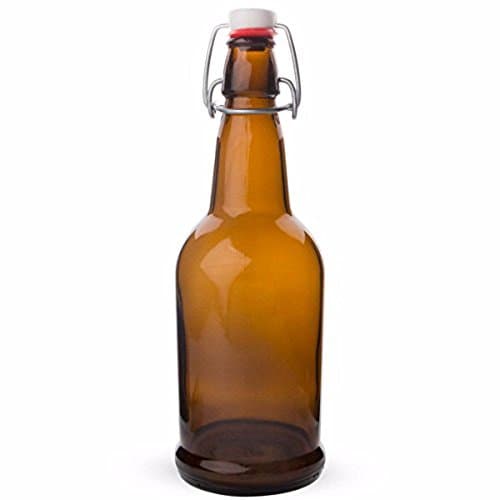
EZ Cap Swing Top Bottles, Amber Glass, 16 oz (Case of 12)
The only bottle here with a published pressure rating — 100 PSI — in amber glass, which is the combination a second ferment actually asks for.
Who it is for. Anyone doing a second ferment who wants a bottle with a number behind it rather than a shape that looks strong.
Published specifications
Capacity
16 oz
Glass color
Amber
Pressure rating
“Pressure rated to 100 PSI which means they can easily handle the carbonation of soda pop and hard seltzer”
Case quantity
12 bottles, includes 12 swing tops
Closure
Reusable swing top; also accepts a 26 mm pry-off crown cap
Maker’s note
“These swing tops are designed to be primarily sealed with a crown cap closure for long term storage.”
Dimensions
Not published
Source: MoreBeer published EZ Cap product specification (capacity, pressure rating, case contents, crown cap compatibility), morebeer.com/products/ez-cap-swing-top-bottles-amber-glass-16-oz-case-12, fetched 2026-09-01
Rubric — 8.3 / 10
Materials9/10 · weight 28%
Documentation9/10 · weight 22%
Capacity fit8/10 · weight 16%
Cleaning7/10 · weight 18%
Value8/10 · weight 16%
What it gets right
A published 100 PSI rating is the single most useful number in this whole category, and almost nobody publishes one
Amber glass blocks the light that degrades a bottle sitting out on a counter through a second ferment
The dual finish means you can crown-cap a batch you want to leave for months and swing-top the ones you will drink this week
16 oz is one serving, so a bottle gets opened once and drunk rather than losing its carbonation over three days
What it costs you
Swing-top gaskets perish, and a tired gasket is the commonest cause of a flat second ferment
No dimensions published, so fitting twelve of them on a fridge shelf is a measuring job when they arrive
Crown caps are sold separately if you want the long-storage option the maker recommends
Skip it if. You want to see the color of the finished drink. Amber hides it; the clear version of the same bottle does not.
A gallon jar that arrives with the muslin cover, the band and a temperature strip already in the box, which is the whole non-culture half of a first batch.
Who it is for. A first-time brewer, or anyone who has learned that the fewer parts a fermentation vessel has, the fewer places a batch can go wrong.
Published specifications
Capacity
1 gallon
Material
Glass
Included
Muslin cover, rubber band, temperature strip
Spigot
None
Dimensions
Not published
Mouth diameter
Not published
Source: Fermentaholics published jar listing contents, fermentaholics.com/product/printed-gallon-kombucha-glass-jar-2-pack/, retrieved 2026-09-01
Rubric — 7.7 / 10
Materials8/10 · weight 28%
Documentation5/10 · weight 22%
Capacity fit8/10 · weight 16%
Cleaning9/10 · weight 18%
Value9/10 · weight 16%
What it gets right
The temperature strip in the box means the jar tells you its own temperature from day one
Muslin breathes and blocks fruit flies, which is exactly what a kombucha cover has to do and what a solid lid does not
No spigot means no seal, no gasket and nothing to disassemble — the easiest vessel here to actually clean
The cheapest way into a proper gallon vessel
What it costs you
No published dimensions at all
No volume markers, so the starter reserve is eyeballed
No tap, so tasting means dipping and bottling means lifting
Skip it if. You want to draw a sample without opening the jar. A plain jar has to be opened every time you taste it.
#ad No live price feed yet, so no number is shown rather than a stale one. How this is funded.
FAQ
Questions people actually ask
How do I rehydrate dehydrated water kefir grains?+
In unchlorinated, unfluoridated water with a quarter cup of cane sugar to three or four cups of water, at 68 to 85 F, changing the sugar water every 24 hours. Cultures for Health publishes a three-to-four-day window, extending to seven.
How many water kefir grains do I need per batch?+
One to two teaspoons of grains per four cups of liquid, per Cultures for Health's published working ratio. Established grains at that ratio yield two to three quarts every 24 to 48 hours.
Why are my water kefir grains not multiplying?+
Usually the water, in which case chlorine or chloramine is suppressing them; or a lack of trace minerals, since heavily filtered water and refined sugar supply none; or a room below the published 68 to 85 F band; or too many grains crowded into too little liquid.
Can I use tap water for water kefir?+
Not directly. Cultures for Health specifies unchlorinated, unfluoridated water. Filtered water works; leaving tap water standing overnight releases free chlorine but does not remove chloramine, which many utilities now use instead.
How long do dehydrated water kefir grains keep?+
Cultures for Health publishes 12 to 18 months at room temperature between 68 and 78 F, and 18 months or more refrigerated at 40 to 45 F. That long shelf life is what makes dehydrated grains easy to buy well in advance.
Sources
Every specification cited on this page came from one of these documents, retrieved on the date shown against the product it belongs to.
Grains or powder, what each maker actually publishes, the activation month in real numbers, and the jar-and-strainer question every daily brewer runs into.
Chlorine versus chloramine, what boiling and standing overnight actually remove, and the published flow rate a carbon filter needs to handle chloramine.
Three starters from one maker, compared on published activation windows, ratios and shelf life — and an honest account of where the documentation ends.