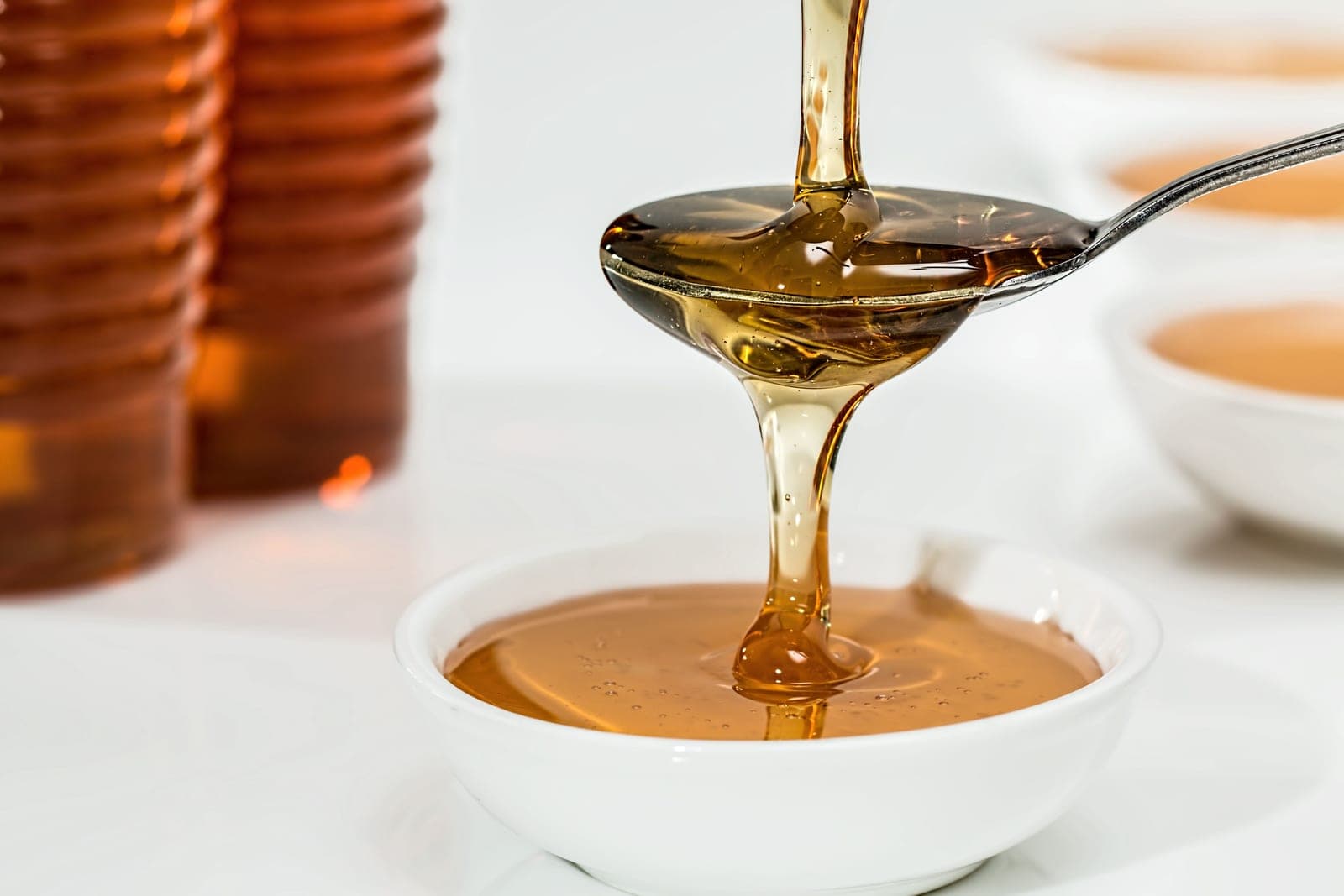
Brew green tea, let it cool completely, stir in honey, add a jun culture with its starter tea at roughly ten percent of batch volume, cover with cloth and leave it somewhere cool. Jun finishes faster than kombucha — start tasting on day three. Never add honey to hot tea, and never use a kombucha culture.
What makes jun jun
Jun is a tea ferment that runs on green tea and honey instead of black tea and cane sugar, driven by its own distinct culture. It looks like kombucha in the jar — same rubbery pellicle at the surface, same cloudy liquid — and the finished drink is lighter, more floral and less sharp.
Three substitutions is the whole difference, and every one of them matters. The tea has to be green. The sweetener has to be honey. And the culture has to be a jun culture, because a kombucha SCOBY fed honey does not become one — honey is antimicrobial, a culture selected for cane sugar handles it badly, and what you get is a weakened kombucha culture rather than jun.
If you have brewed kombucha, essentially everything else transfers: the same jar, the same cloth cover, the same band, the same bottles, the same second ferment. This is not a new hobby. It is the one you already have with a different feedstock and a shorter clock.
What you need
Nothing here is exotic, and if you already brew kombucha you own most of it.
A jun culture with measured starter tea. The part that cannot be improvised or converted. Buy from whoever publishes the starter volume in fluid ounces — buying a jun SCOBY covers what should be in the box.
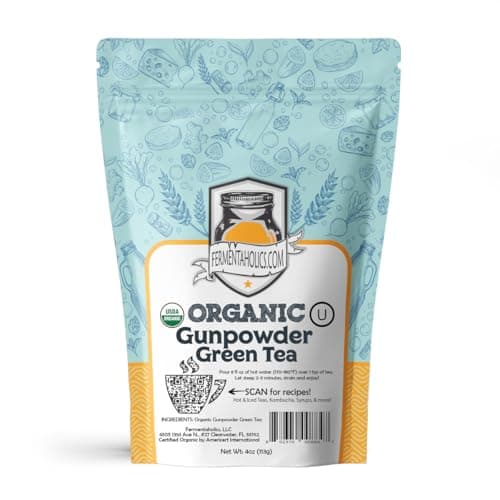
Green tea, loose leaf. A named green works better than a blend here because you can repeat it. Gunpowder green is the style the culture sellers point at.
Raw honey, and a fair amount of it. Roughly a cup per gallon, which is the same volume kombucha takes in sugar. This is the expensive part of jun.
A gallon vessel, a cloth cover and a band. Identical to kombucha. A tap is a genuine advantage here because jun moves fast and you will be tasting often.
Pressure-rated bottles. Jun carbonates readily, and a published pressure rating matters as much as it does for kombucha.
What you do not need is a separate set of anything. Running jun alongside kombucha means two jars and two labels, not two kitchens.
The inputs, against kombucha
A one-gallon jun batch against a one-gallon kombucha batch. Starter volume is the published figure that ships with the culture; the tea and sweetener ratios are the working figures used across this site.
Input
Jun
Kombucha
Tea
Green, about 2 tbsp loose leaf
Black or green, about 2 tbsp
Sweetener
Raw honey, roughly 1 cup
Plain cane sugar, 1 cup
Culture
A jun culture
A kombucha SCOBY
Starter tea
12 fl oz published, 9.4% of a gallon
About 10% of batch volume
Cover
Cloth and a band
Cloth and a band
Temperature
Cooler than kombucha
75-85 F
First ferment
Faster, often under a week
7-14 days
The starter figure is worth pausing on because it is the one number in this table somebody published rather than a working rule. A jun culture sold for a gallon ships with twelve fluid ounces of mature starter tea, which against 128 oz is 9.4 percent — landing almost exactly on the ten percent rule the same maker publishes for its kombucha cultures. The instruction and the quantity in the box agree, which is rarer than it should be.
The picks
The three things that make it jun
The culture, the leaf and the honey. Everything else on this page is equipment you probably already own, and none of it is jun-specific.
Fermentaholics
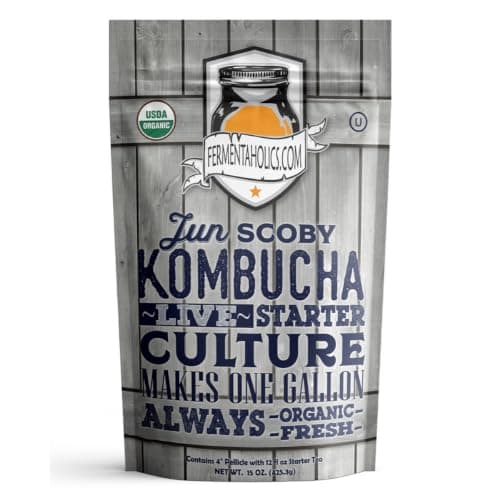
Jun Kombucha Starter Culture, 12 fl oz
A jun pellicle with twelve fluid ounces of pre-measured mature starter tea — the culture on its own, for anyone who already owns a gallon jar.
Raw, unfiltered, single-ingredient honey in a squeeze bottle — the cheapest honest way to feed a jun batch, and the maker states exactly what it did to it.
A gallon batch is about twenty minutes of work, most of which is waiting for tea to cool.
Brew the green tea strong — roughly two tablespoons of loose leaf per gallon — and let it steep properly. This is a feedstock, not a delicate cup, so a hard steep is correct. Then take the leaf out.
Now cool it completely before the honey goes anywhere near it. This is the step that separates jun from kombucha procedurally, and it is the one people get wrong. Sugar dissolves happily in hot water and nothing is lost. Honey does not benefit from heat, and pouring it into hot tea drives off exactly the volatile character you are paying for. Cool first, then stir the honey in until it is fully dispersed — honey settles, and a layer of it sitting on the bottom of the jar is not feeding anything.
With the sweetened tea at room temperature, add the culture and all of its starter tea. The starter is the part that acidifies the batch immediately and protects it through the first days, the same as in a kombucha batch. Cover with a tight-woven cloth and a band — never a lid, because this stage is aerobic and must not build pressure.
Then leave it somewhere cool and stable and start tasting on day three.
Honey: raw or not, and how much
The honey question generates more argument than anything else in jun, and the honest position is narrower than either camp claims.
Raw, unfiltered honey is what jun cultures are adapted to and what almost every seller assumes. It is also a live product with genuine antimicrobial activity and its own microbial population, which means a young or stressed culture is the fragile party in that relationship. Established cultures handle it without difficulty; a culture on its first or second batch is less robust.
Pasteurized honey works and is more predictable, at the cost of the character that made you want jun rather than kombucha. It is a reasonable way to build a new culture up over two batches before switching.
On quantity, roughly a cup per gallon is the working figure — the same volume kombucha takes in sugar. Jun batches are more sensitive to honey quality than kombucha batches are to sugar quality, for the simple reason that plain white sugar is inert and honey is not. One ingredient on the label, and no added syrup, is the thing actually worth checking.
Timing, and why jun catches people out
Jun ferments faster than kombucha and it does so at a lower temperature. Both halves of that sentence cause problems for people arriving from kombucha.
The speed means a schedule calibrated to a fortnight will overshoot badly. Taste from day three, and expect to be bottling in under a week rather than after two. A jun batch left for a kombucha-length ferment does not fail — it simply goes sharp and loses the floral quality that is the entire reason to brew jun.
The cooler working range is the upside and the reason a lot of people switch. Kombucha wants roughly 75 to 85 F and a great many kitchens never get there; the temperature page covers what a cold room does to a batch. Jun is comfortable below that band, which makes it the realistic ferment for a house that would otherwise need a heat mat and a controller.
Nobody publishes a precise jun temperature band, and this page is not going to invent one. What is consistent across sellers is the direction: cooler than kombucha, faster than kombucha. Put a strip thermometer on the glass and learn what your own kitchen does, because that is the only figure that will actually be true.
The second ferment
Identical to kombucha in mechanism and worth doing, because jun takes fruit beautifully.
Draw the finished jun off into pressure-rated bottles, add a small amount of fruit or juice, seal, and leave at room temperature for a day or two before refrigerating. The second fermentation guide covers the method and the quantities; nothing about it changes for jun.
Two adjustments are worth making. Jun carbonates readily, so check earlier than you would with kombucha — a day sooner is a reasonable default. And go lighter on the fruit than you would with kombucha: jun's appeal is the honey and green tea character, and a heavy fruit addition buries exactly what you paid for.
What goes wrong that never happens with kombucha
A sluggish first batch on raw honey. The commonest jun-specific complaint. A newly arrived culture meeting a strongly antimicrobial honey can take a batch or two to establish. Build it up rather than concluding the culture is dead.
Honey settled on the bottom. Sugar dissolves and stays dissolved; honey does not disperse on its own. A sweet layer under the culture is feeding nothing and skews everything you taste. Stir it in properly at the start.
Overshooting the window. Jun on a kombucha schedule goes sharp. This is a timing error rather than a fault, and the same rescue options apply — cut it, second-ferment it with fruit, or keep it as strong starter.
A culture stored on the wrong feedstock. A jun culture parked in a kombucha hotel is being fed black tea and sugar and will drift. Keep the surplus in its own jar of strong finished jun, and label it.
What does not change is the thing that would actually ruin a batch. Dry, fuzzy growth on the surface in white, green, blue or black is mold, and the rule is the same as for kombucha: the batch and the culture both go. Brown stringy strands hanging off the pellicle are yeast and are entirely normal.
What jun costs to keep running
Worth being straight about, because it is the one genuine drawback and it compounds weekly.
The culture is a one-time purchase that reproduces, exactly like a kombucha SCOBY, and the tea is trivial — a four-ounce bag of gunpowder green is published at eleven gallons. The recurring cost is honey, at roughly a cup per gallon, and honey is meaningfully more expensive than cane sugar.
That makes jun the costliest reusable-culture ferment covered on this site to run, even though the equipment is identical to kombucha's. It is not a large amount of money in absolute terms, but anyone weighing whether home brewing repays itself should put honey in the recurring column rather than assuming jun and kombucha cost the same to run.
Heads up: some links on this page are affiliate links. If you buy through one we may earn a commission at no extra cost to you. It never changes a ranking, and we take no payment for placement. The full version.
The short answer
Quick picks
Ranked on the published rubric. Every row jumps to that product's full write-up below; the button goes straight to Amazon.
#
Product
Best for
Score
Price
1
Fermentaholics
Jun Kombucha Starter Culture, 12 fl oz
A jun pellicle with twelve fluid ounces of pre-measured mature starter tea — the culture on its own, for anyone who already owns a gallon jar.
Raw, unfiltered, single-ingredient honey in a squeeze bottle — the cheapest honest way to feed a jun batch, and the maker states exactly what it did to it.
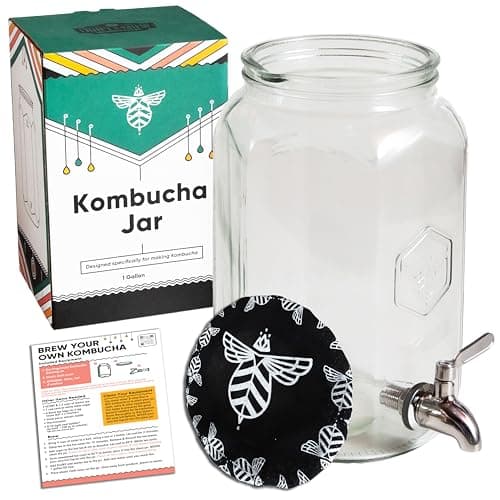
The one gallon jar in this group whose valve grade is published — 304 stainless — which is the single specification that decides whether a spigot belongs anywhere near kombucha.
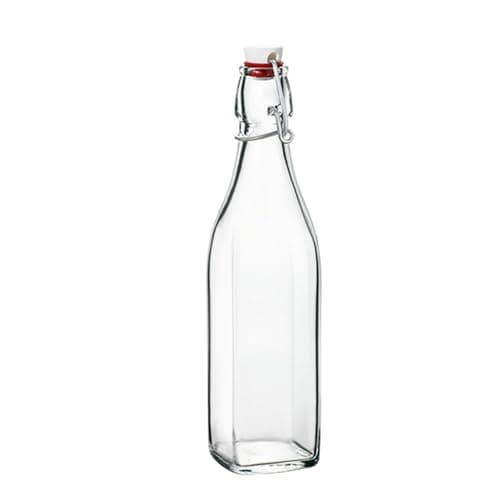
Italian soda-lime glass with a published height and diameter and a hermetic clamp seal — the bottle that looks like a bottle, with the dimensions to check it fits a fridge door.
Fermentaholics Jun Kombucha Starter Culture, 12 fl oz
A jun pellicle with twelve fluid ounces of pre-measured mature starter tea — the culture on its own, for anyone who already owns a gallon jar.
Who it is for. A kombucha brewer with a spare jar who wants to try jun without buying a second set of hardware.
Published specifications
Culture
USDA Certified Organic jun SCOBY
Starter tea volume
12 fl oz
Batch size
“Makes 1 Gallon”
What ships
“pre-measured strong, mature liquid starter tea packaged with a starter pellicle”
Feedstock
Green tea and honey, not black tea and cane sugar
Certification
USDA Certified Organic, Kosher
Production
“grown in our fully licensed lab”
Shipped weight
0.5 lb
Jar
None. This is the culture only
Source: Fermentaholics published Jun Kombucha Starter Culture listing (organic jun SCOBY, 12 fl oz pre-measured mature starter tea with a starter pellicle, makes 1 gallon, green tea and honey feedstock, USDA Organic and Kosher, licensed lab, 0.5 lb shipped weight), Amazon B01NADMSEJ, retrieved 2026-09-13
Rubric — 8.4 / 10
Materials9/10 · weight 28%
Documentation8/10 · weight 22%
Capacity fit8/10 · weight 16%
Cleaning8/10 · weight 18%
Value9/10 · weight 16%
What it gets right
Twelve fluid ounces against a 128 oz gallon is 9.4 percent, which lands on the same ten percent starter rule the maker publishes for its kombucha cultures
It is the culture on its own, so it costs a fraction of the jun kit if you already own a gallon jar
A jun culture bought as a jun culture is the only reliable way to get one — feeding a kombucha SCOBY honey weakens it rather than converting it
Same licensed lab and the same organic and kosher certification as the maker’s kombucha line
What it costs you
You still need a jar, a cover, a band, green tea and honey before anything ferments
Honey is meaningfully more expensive per batch than cane sugar, and jun wants a lot of it
A live culture in transit is a live culture in transit — heat and delay are risks nobody controls
No shelf life is published once it arrives
Skip it if. You own no gallon jar. The Essentials jun kit bundles the same culture with the jar, cover and band for not much more.
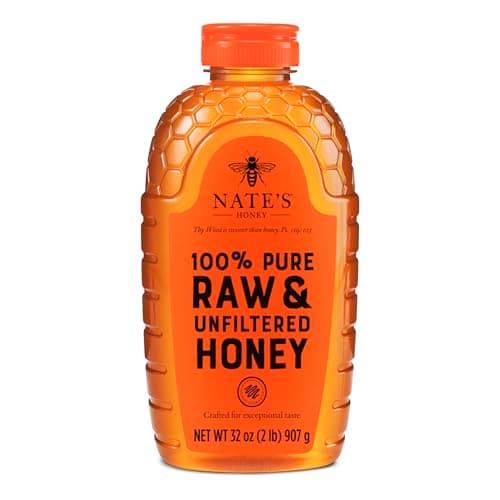
Nate's Honey 100% Pure, Raw & Unfiltered Honey, 32 oz
Raw, unfiltered, single-ingredient honey in a squeeze bottle — the cheapest honest way to feed a jun batch, and the maker states exactly what it did to it.
Who it is for. Anyone starting jun who wants raw honey without the single-origin price, and who would rather spend the difference on the culture.
Published specifications
Ingredients
“one ingredient: Honey. All we add is the bottle.”
Size
32 oz squeeze bottle
Shipped weight
2 lb
Processing
“Raw & Unfiltered means it is gently warmed for pourability and unfiltered to keep the natural goodness, like pollen, intact.”
Source
A blend of honey varietals. No single origin or floral source stated
Testing
Maker states a purity guarantee and “strict testing standards”
Batch coverage
About two and a half one-gallon jun batches at a cup each
Source: Nate's Honey published listing (100% pure raw and unfiltered, single ingredient, 32 oz squeeze bottle, 2 lb shipped weight, stated gentle warming for pourability and unfiltered to retain pollen, purity guarantee), Amazon B00CMQD3VS, retrieved 2026-09-14
Rubric — 8.0 / 10
Materials8/10 · weight 28%
Documentation7/10 · weight 22%
Capacity fit7/10 · weight 16%
Cleaning9/10 · weight 18%
Value9/10 · weight 16%
What it gets right
Raw and unfiltered, which is what a jun culture is adapted to — and the maker says plainly that the only processing is gentle warming for pourability
A single-ingredient label with no added syrup is the one thing that genuinely matters here, and it is stated rather than implied
A squeeze bottle pours a measured cup into a jar far more easily than a wide-mouth tub, which matters on a weekly cycle
Cheap enough that jun stops being an expensive hobby, which is the commonest reason people abandon it
What it costs you
No floral source or origin is published, so the flavor will vary between batches in a way a single-origin honey would not
Thirty-two ounces is about two and a half gallon batches — a regular jun brewer will reorder often or buy bulk
Raw honey carries its own microbes and antimicrobial compounds, and a young jun culture is the fragile party in that relationship
“Gently warmed” is not a temperature. How raw is raw is not a checkable number here, as it is nowhere in this category
Skip it if. You brew jun weekly. The cost per gallon drops sharply on a bulk jug, and honey keeps essentially indefinitely.
The one gallon jar in this group whose valve grade is published — 304 stainless — which is the single specification that decides whether a spigot belongs anywhere near kombucha.
Who it is for. A batch brewer who wants a tap for tasting and bottling, and who wants the spigot’s material in writing.
Published specifications
Capacity
1 gallon
Height
10 inches
Diameter
6 inches
Diameter including valve
7.75 inches
Valve material
304 grade stainless steel
Volume markers
1 gallon and 2 cup markers
Care
Hand wash only — not dishwasher safe
Mouth diameter
Not published
Source: Craft a Brew published dimensions, valve grade and care instructions, craftabrew.com/products/kombucha-jar-with-valve, fetched 2026-09-01
Rubric — 8.0 / 10
Materials9/10 · weight 28%
Documentation9/10 · weight 22%
Capacity fit7/10 · weight 16%
Cleaning6/10 · weight 18%
Value8/10 · weight 16%
What it gets right
304 grade is stated outright, so you are not inferring a spigot’s alloy from a photograph
10 in tall by 7.75 in across including the valve is a published footprint you can check against a counter and a cupboard
Volume markers at 1 gallon and 2 cups line up exactly with a batch and its starter reserve
A tap means you can taste on day six without lifting the jar or dropping anything into it
What it costs you
Hand wash only, and a spigot is the part that most wants a dishwasher
Mouth diameter is not published, which matters because a pellicle grows to the width of the vessel and has to come back out
At one gallon it is small for true continuous brewing — Kombucha Kamp is explicit that a 1-gallon jar is not a good continuous-brew choice
Skip it if. You want to run continuous brew. One gallon does not hold enough liquid to keep a stable culture while you draw off a bottle at a time; go to 2 gallons or more.
Italian soda-lime glass with a published height and diameter and a hermetic clamp seal — the bottle that looks like a bottle, with the dimensions to check it fits a fridge door.
Who it is for. Someone bottling a lightly carbonated kombucha for the table, or storing finished kombucha in the fridge rather than conditioning it on a counter.
Published specifications
Capacity
33.75 oz (1 liter)
Height
12.13 inches
Diameter
3.5 inches
Glass
BPA-free and lead-free soda-lime glass
Origin
Glass and components made in Italy
Closure
Hermetic swing top: metal clasp, stopper and gasket
Care
Dishwasher safe without the swing top. Hand wash the metal clamp, stopper and gasket.
Pressure rating
Not published
Source: Bormioli Rocco published Swing bottle specification (capacity, 12.13 in height, 3.5 in diameter, soda-lime glass, hermetic seal, care instructions), retailer specification listings retrieved 2026-09-01
Rubric — 8.0 / 10
Materials8/10 · weight 28%
Documentation8/10 · weight 22%
Capacity fit8/10 · weight 16%
Cleaning8/10 · weight 18%
Value8/10 · weight 16%
What it gets right
Height and diameter both published, so you can check a fridge shelf before ordering
Lead-free soda-lime glass is stated, which matters for a container holding a pH-3 liquid for weeks
The bottle body is dishwasher safe, and only the small parts need hand washing
Genuinely presentable — this is the bottle to hand someone
What it costs you
No published pressure rating, which is the one number a second ferment cares about most
Clear glass, so light gets to the drink
A liter is a lot to open at once
Skip it if. You are chasing hard carbonation. Without a stated pressure rating, a bottle you are deliberately building pressure inside is a bottle you are guessing about — use the rated EZ Cap instead.
Brew green tea strong, cool it completely, stir in about a cup of raw honey per gallon, then add a jun culture with all of its starter tea — about 12 fl oz for a gallon batch. Cover with cloth and a band, keep it somewhere cool, and start tasting on day three. Jun finishes faster than kombucha.
What is the difference between jun and kombucha?+
Jun ferments green tea and honey with its own distinct culture and runs cooler and faster; kombucha ferments black or green tea and cane sugar with a kombucha SCOBY at roughly 75 to 85 F. Jun tastes lighter and more floral. The cultures are not interchangeable.
Can I use a kombucha SCOBY to make jun?+
No. Honey is antimicrobial and a culture selected for cane sugar and black tea handles it badly — it slows, thins and produces weaker pellicles. Feeding a kombucha SCOBY honey weakens it rather than converting it, which is why jun is sold as its own culture.
How much honey do you use for jun?+
Roughly one cup per gallon, which is the same volume kombucha takes in cane sugar. Add it to tea that has cooled completely, never to hot tea, and stir until fully dispersed — honey settles, and a sweet layer on the bottom of the jar is not feeding the culture.
Does jun have to use raw honey?+
Raw, unfiltered honey is what jun cultures are adapted to and what most sellers assume. It is also antimicrobial, so a newly arrived culture can take a batch or two to establish on it. Pasteurized honey works and is more predictable, and is a reasonable way to build a new culture up before switching.
How long does jun take to ferment?+
Faster than kombucha — often under a week rather than seven to fourteen days, and at a cooler temperature. No maker publishes a precise band, so taste from day three and use a strip thermometer on the glass to learn what your own kitchen does.
Sources
Every specification cited on this page came from one of these documents, retrieved on the date shown against the product it belongs to.